When an active jobsite crosses your route
Miller & Jacobs reviews injuries to workers, delivery drivers, residents, visitors and people passing Miami construction sites. We look at why you were there, who controlled the work and access, and which claims or benefits may be available.
Free consultation. No attorney fee unless compensation is recovered.
Identify the route and the work
The route into a building or work area can matter as much as the equipment involved.
✓
Were you a worker, delivery driver, resident, guest, or passerby?
✓
Who directed access through the gate, loading area, or corridor?
✓
Were barriers or warning signs in place when you arrived?
✓
Which company controlled the task or equipment involved?
Describe the location in your own words. Do not return to a hazardous area to collect evidence.
$300M+
Reported Recoveries for Injured Clients
50+ Years
Combined Legal Experience
230+
Combined Jury Trials Across Their Careers
Former Prosecutors
Experienced Trial Attorneys
Start with your role
A worker and a resident struck by the same object may have different claims. Your job, reason for being there, and role in the project help determine whether workers’ compensation or a lawsuit is available.
✚
Save delivery instructions, visitor messages, work assignments or building notices. Being directed into an area helps explain why you were there. It does not, by itself, prove that someone failed to use reasonable care.
$
Keep treatment records and work restrictions, together with the tasks you cannot now perform. For lasting limitations, our Miami catastrophic injury guidance explains how future care and assistance needs are documented.
◈
A loading zone may reopen, a barrier may move, or scaffolding may be removed. Note who was present and preserve photographs already available. Do not interfere with repairs, enter restricted property, or move equipment yourself.
Our Miami personal injury practice can help assess the circumstances through a
free consultation.Miami project records
For property within the City of Miami, the city’s inspection-history guidance explains searches by address, permit or folio. A Miami mailing address may be outside city limits. Check which city or county office holds the records.
A permit can identify the work and useful records. It does not, by itself, prove who controlled the task that caused the injury. For incidents at an entrance, corridor or other occupied area, our Miami premises liability guidance explains the property owner’s legal duties.
What happens after leaving the site
You may have expected to make a delivery, finish a shift, or get home through a building under repair. Now you may need help with travel, household tasks, or earning a living. Describe those changes rather than minimizing them because the visit to the site was brief.
The legal review connects the injury to its actual consequences. Medical restrictions, earnings records, and information about help at home can support that account.
Recovery needs should be documented in terms of the life and work the injury changed.
Travel to treatment and practical limits on driving
Income interrupted while restrictions remain in place
Work tasks that cannot safely be resumed
Assistance with household and caregiving responsibilities
Future care needs supported by qualified evidence
Control and immunity require separate review
We identify the owner, your employer, and the contractors involved. Workers’ compensation immunity can protect an employer and some contractors or subcontractors from injury lawsuits. A different company name does not always mean you can sue it.
We check who placed the barrier, operated the vehicle, supplied the equipment or managed the route. Contracts and site records help explain each company’s work and legal duties.
Read Florida’s contractor and subcontractor rules →Follow the responsibility, not just the sign
–
Delivery appointments, gate logs, and entry instructions
–
Work orders and agreements describing each company’s role
–
Messages changing a route, task, or unloading location
–
Equipment rental, inspection, and service records
–
Insurance information and employment or pay records
The legal route depends on the relationship
Workers’ compensation may provide benefits for a covered work injury without proof that the employer was at fault. A separate injury lawsuit needs a legal basis and evidence supporting the claim. Residents and visitors do not become construction employees just by entering the property.
✚
Covered work injury
Workers’ compensation can cover approved medical care and certain lost wages. Eligibility depends on the injury, coverage and work status. It does not pay for pain and suffering. The company’s label for your job does not settle whether you qualify.
–
Authorized medical treatment for a covered injury
–
Disability benefits when statutory conditions are met
–
Assessment of lasting impairment where applicable
–
Procedures for a disputed benefit decision
⚖
Available civil claim
An injury lawsuit may seek medical costs, lost earnings, pain and other losses the law allows. Workers must also address immunity and repayment of benefits. For residents and visitors, we examine the legal duties tied to the property and the activity.
–
Documented care and supported future needs
–
Lost earnings and supported work limitations
–
Pain, disability, and the impact on daily activities
–
Other legally recoverable losses supported by evidence
You may receive workers’ compensation benefits and still have a claim against a responsible third party under Florida’s third-party recovery provisions. The employer or its insurer may be entitled to repayment from that recovery. Review both claims before signing a release.
Read the third-party recovery statute →Tell us how you reached the spot
Bring the address, the reason you were there, and any notice or message already in your possession. We can identify which additional facts need investigation without asking you to confront a contractor.
Firm Headquarters
Pompano Beach, Florida 33062
Match the investigation to the activity
We match the records to how you were injured and why you were at the site. The examples below show what to look for, not who is at fault.
Temporary routes
Look for notices, route plans, photographs, lighting information, and instructions given to residents or visitors. The exact place and time matter.
Loading and lifting
Delivery appointments, lift plans, communications, and video may help identify who controlled the load and access to the area.
Equipment supplied for a task
The equipment’s name or serial number, condition, service records, and who kept it can help identify a product or maintenance issue. Do not test it yourself.
Temporary power
Work orders, equipment information, and the sequence of the task may clarify how the hazard arose. Medical care and site safety take priority over photographs.
Openings and structural changes
Plans and inspection records describe the work. Photos taken near the time of the injury and witness accounts can show the condition then.
Vehicles at an entrance
The vehicle’s route, operator, visibility, and instructions need review. Our Miami truck accident guide addresses related commercial-vehicle evidence.
Protect the information you already have
Prioritize treatment and emergency safety. Do not postpone required injury reporting while trying to determine every company’s responsibility.
✚
Explain whether you fell, were struck, or were exposed to a hazard. Keep work restrictions and follow-up instructions. Seek medical advice for new or worsening symptoms.
✓
Florida generally requires employees to tell their employer about a work injury within 30 days. Exceptions can apply. The state’s injury-reporting guidance explains how to report it. Telling another contractor is not always notice to your employer.
⌕
Keep the full message directing your route, not just the last line. If photographs already exist, preserve their originals and identify who took them.
$
Write down the names and contact information you have. Distinguish what you personally observed from what someone later told you.
✓
A document may settle more than a repair bill or benefit dispute. Have its scope explained before signing away injury rights.
From the first account to a legal decision
We start with your role and how you entered the work area. We then examine what caused the injury, which claims are available, and what losses the records support.
Your account
Describe why you were present, the directions you received, and the event that caused the injury.
The legal relationship
Review the contractor chain and other relationships before deciding which legal route may be available.
The evidence
Identify relevant access instructions, site records, equipment information, witnesses, and injury documentation.
The next decision
We review the evidence, defenses, insurance and proposed settlement. If the claim supports a lawsuit, we prepare for that step.
A supported claim, not assumptions
Miller & Jacobs reviews fault, insurance and losses in the cases it accepts. Early advice can help identify records to preserve and deadlines to meet.
An incomplete company list does not prevent an initial discussion. Explain your role and the task or route involved.
Contracts, instructions, photographs, and medical evidence can support or challenge the first account of an incident.
We address the other side’s defenses, explain gaps in the evidence, and discuss the options those facts support.
The firm’s South Florida office is in Pompano Beach. Call before traveling so the team can explain the appropriate next step.
Prior results do not guarantee an outcome. Responsibility, injuries, coverage, evidence, and applicable law differ in each matter.

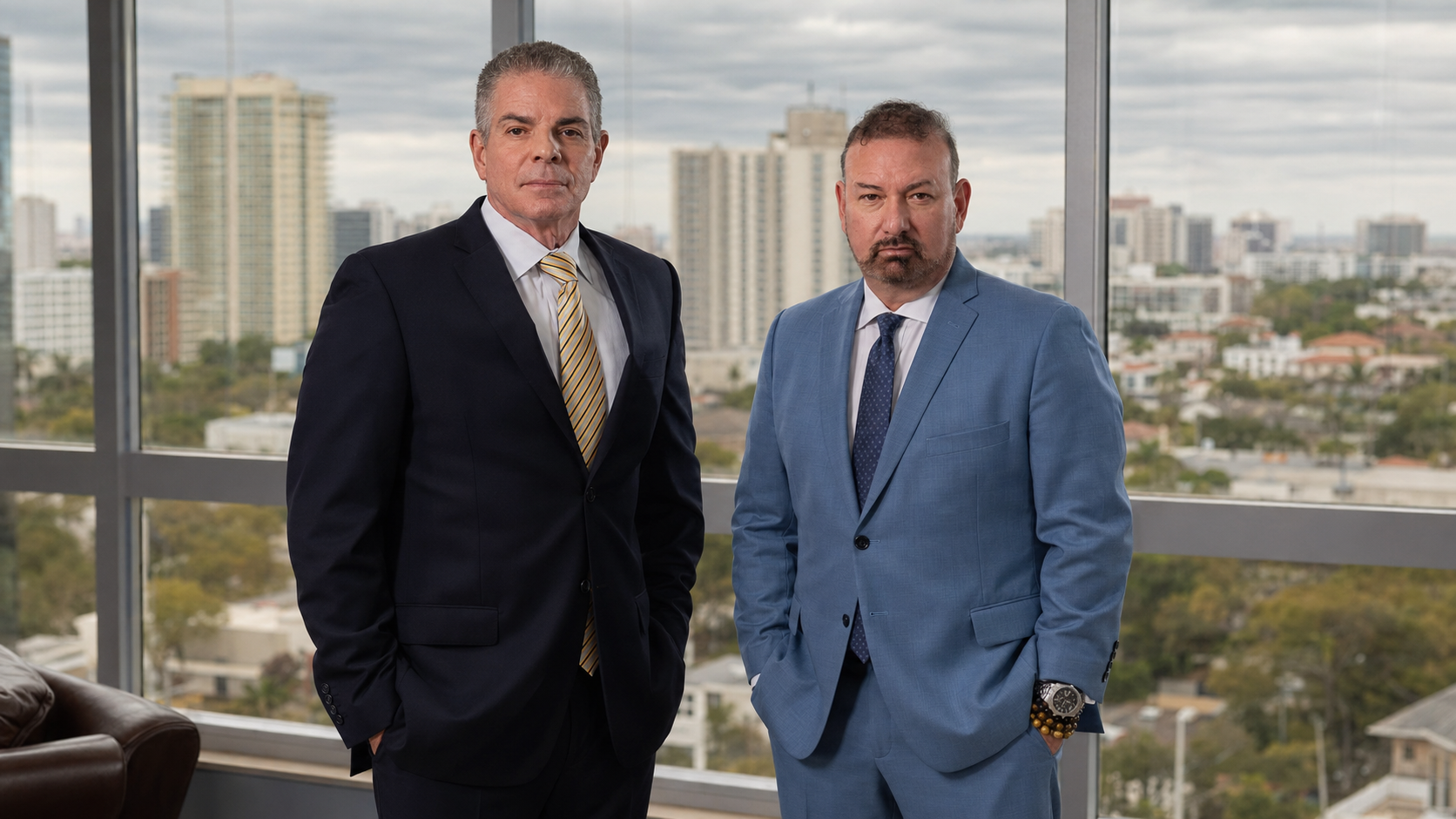
Partner · Former Prosecutor
Mark J. Miller is a partner at Miller & Jacobs. His biography describes his legal background and courtroom experience.
Read Mark Miller’s Bio →
Partner · Former Prosecutor
Rick S. Jacobs is a partner at Miller & Jacobs. His biography describes his professional background and work with the firm.
Read Rick Jacobs’s Bio →Meet the partners
Review the partners’ backgrounds and ask how the firm would handle the issues in your case. Staff and other professionals may assist with records and case support.
The attorney biographies provide more detail before you choose representation.
Decisions around an active property
Your role and work relationship shape the available claim. Reporting an injury and filing a lawsuit have separate deadlines. Ask for a prompt review of both.
Related Miami injury issues