The presence of a firearm does not explain why an offense was charged. The case may concern eligibility, possession, location, a display, or conduct tied to another allegation. Miller & Jacobs identifies the legal theory and examines the evidence needed to support it.
Bring the charge and every relevant court order. Do not handle or transport a firearm to the office; ask how documents and evidence should be provided.
5401 South Kirkman Road, Suite 660
Mark J. Miller and Rick S. Jacobs
Combined Jury Trials to Verdict Across Their Careers
Your Case Handled by Mr. Miller or Mr. Jacobs
Counsel needs the reports and your account, including facts that may be difficult to discuss. The review should identify legal issues, disputed facts, and any evidence worth preserving promptly.
Describe why police approached, what was requested, and what occurred during any search. Preserve available paperwork. The legal basis for obtaining evidence must be assessed under the circumstances.
Who used the vehicle, room, bag, or storage location? Counsel can evaluate knowledge, control, statements, and other evidence. Mere ownership by another person does not automatically settle the issue either.
If a confrontation is alleged, explain the sequence, distance, movement, words, and perceived danger. Preserve complete recordings. A claimed justification must be evaluated for the particular conduct and charge.
A weapons charge may accompany an assault or battery allegation or another offense. Ask what the State must prove for each count and whether an enhancement or minimum sentence actually applies.
A release order or separate court order may govern possession, contact, or surrender. Tell counsel what is in your control and ask about lawful compliance. Do not assume a general carry right overrides a specific enforceable restriction.

You may have believed you understood your rights and still face an accusation you did not expect. A useful consultation should identify the rule the State relies on and the facts it says violate that rule. That gives you a clearer starting point than assumptions about what every firearm case means.
Begin with the statute and the event described in the report. Our Orlando criminal defense practice evaluates the firearm allegation and any accompanying charge together.
Section 790.01 authorizes concealed carry for licensed people and certain eligible unlicensed people. Lack of a permit alone is not a complete explanation of unlawful concealed carry. Counsel should examine the statutory criteria and alleged facts.
Section 790.23 addresses possession restrictions tied to specified criminal or delinquency histories. Other laws and orders may also matter. Provide the actual disposition and any restoration or injunction paperwork rather than relying on a description of an old case.
Section 790.10 addresses improper exhibition and includes a necessary-self-defense qualification. Counsel should review what a witness says happened, the surrounding threat, and the evidence of the display.
The Florida Attorney General’s discussion of McDaniels explains the change to Florida’s general open-carry prohibition. It also identifies continuing issues involving prohibited possession, threatening conduct, certain locations, and private property. The current rule and facts both matter.
Identify the Rule at Issue
Call the Orlando office with the charging papers and any relevant orders. We can discuss how the firm would assess the allegation and prepare a defense.
Keep complete copies, including pages that list conditions or exceptions. If property was seized, retain the inventory and notices. Evidence should be preserved lawfully and handled through an appropriate process, without bringing a weapon to a consultation.
01
02
03
04
05
06
07
08
Mark J. Miller or Rick S. Jacobs handles an accepted criminal matter. The conversation should explain which issues can be investigated now, what legal questions require review, and what choices may follow. A general promise about gun rights cannot replace that analysis.

Mark J. Miller is a former assistant state attorney admitted to The Florida Bar in 1995. His experience includes more than 70 jury trials to verdict across his legal career. Read his biography and ask about his approach to your matter.
Read Mark’s Bio →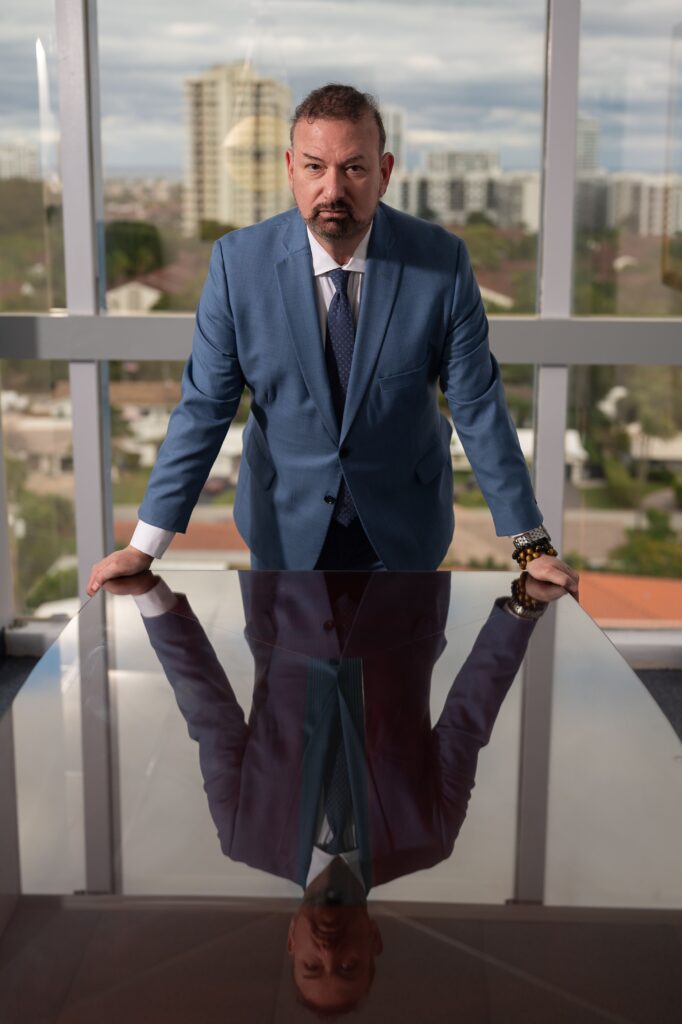
Rick S. Jacobs is a former assistant state attorney admitted to The Florida Bar in 1995. His experience includes more than 160 jury trials to verdict across his legal career. His biography provides background for the conversation about your defense.
Read Rick’s Bio →Confirm whether related proceedings are covered. A criminal case, a property-return issue, and an injunction hearing may require different work. Ask about scope, fees, and additional expenses before signing an agreement.