Pompano Beach & Orlando | Serving Clients Across Florida
Call 24/7: 877-848-5297

Pembroke Pines Intersection Crashes: Pines Blvd Evidence

By Miller & Jacobs Car Accident Attorneys

After a crash at a Pines Boulevard crossing, start with the light, lane and path each driver used. Save your original photos and dashcam files, and ask promptly whether nearby cameras kept video. Local road plans can add context, but they do not prove who caused your crash or rank the city's most dangerous intersections.

Two damaged vehicles and a traffic cone at a crash scene at night.

Save evidence of the exact movement

An intersection name leaves gaps. Note the road you approached on, your direction, your lane and whether you were turning. Sketch the path of each vehicle as you remember it. Separate what you saw from what someone later told you.

01

Scene photos

Save views of the approach, lane arrows, stop line, crosswalk and vehicle damage. Take photos only from a safe place.

02

Witness details

Keep names and contact details. Ask where each person was and what they could see, including the light for your approach.

03

Original files

Keep the full dashcam video and original photos. Make a copy before clipping or marking them.

04

Report details

Keep the report number and agency name. Note any account or diagram you believe is wrong, with evidence that supports a correction.

Date any photos taken later. They show conditions when you took them. For earlier signs or lane markings, seek records from the crash date.

Our  car accident evidence guide  covers bills, insurance letters and proof of missed work. Those help explain your losses alongside the crash sequence.

Can a traffic camera show who had the light?

A camera above the road does not guarantee a saved recording.  Florida 511’s camera page  states that its video and images are not stored or recorded. A business camera or another agency’s system needs a separate check. Ask whether it covered your approach and whether the relevant file still exists.

Give the owner the date, time range, crossing and direction of travel. Ask promptly about saved footage and how it can be kept. Retention periods vary. A useful recording may not exist.

Start with  Pembroke Pines’ records-request instructions  for City records.  Broward County Traffic Engineering  describes its signal work and available traffic and crash studies.

Ask about the signal records

The timing and turn-signal plan for your crash date.

Available outage, repair or maintenance records for your approach.

A temporary traffic plan if road work affected the crossing.

Ask which agency holds the records. The city name in an address does not prove who maintained the signal. A timing plan explains how the light was set up. Other evidence may be needed to show what it displayed at impact.

What do local road plans tell you about a crash?

Pines Boulevard and Flamingo Road

For this crossing, 
separate the layout shown in a plan
 from the layout you actually faced.
On September 17, 2025, the City Commission backed a ground-level design to replace an earlier overpass idea. The  2025 resolution record  shows that more planning was needed. It does not show completed work.

Photos and plans from the time of the crash help establish the lanes and signs you faced.

Pines Boulevard and the I-75 interchange

As checked in October 2026, the Florida Department of Transportation (FDOT) lists an anticipated fall 2027 start for its I-75/Pines Boulevard interchange project. The work would change the overpass, signals, signs and lighting.  FDOT’s future-project page  gives the project limits and schedule.

If your crash involved a ramp, lane shift or work area, ask for the traffic plan for that place and day. Future plans do not prove the conditions during an earlier crash. Dates and plans can change.

A danger ranking needs a separate comparison of crash data. Check the dates, area, severity and traffic volume before relying on a count. Corridor totals may include other crossings and driveways. No current, comparable ranking of Pembroke Pines intersections was verified for this article.
A person looking through a window.

If the other driver remembers a different light, it can leave you unsure whose account will be believed. Start with what you saw and the records still available, one piece at a time.
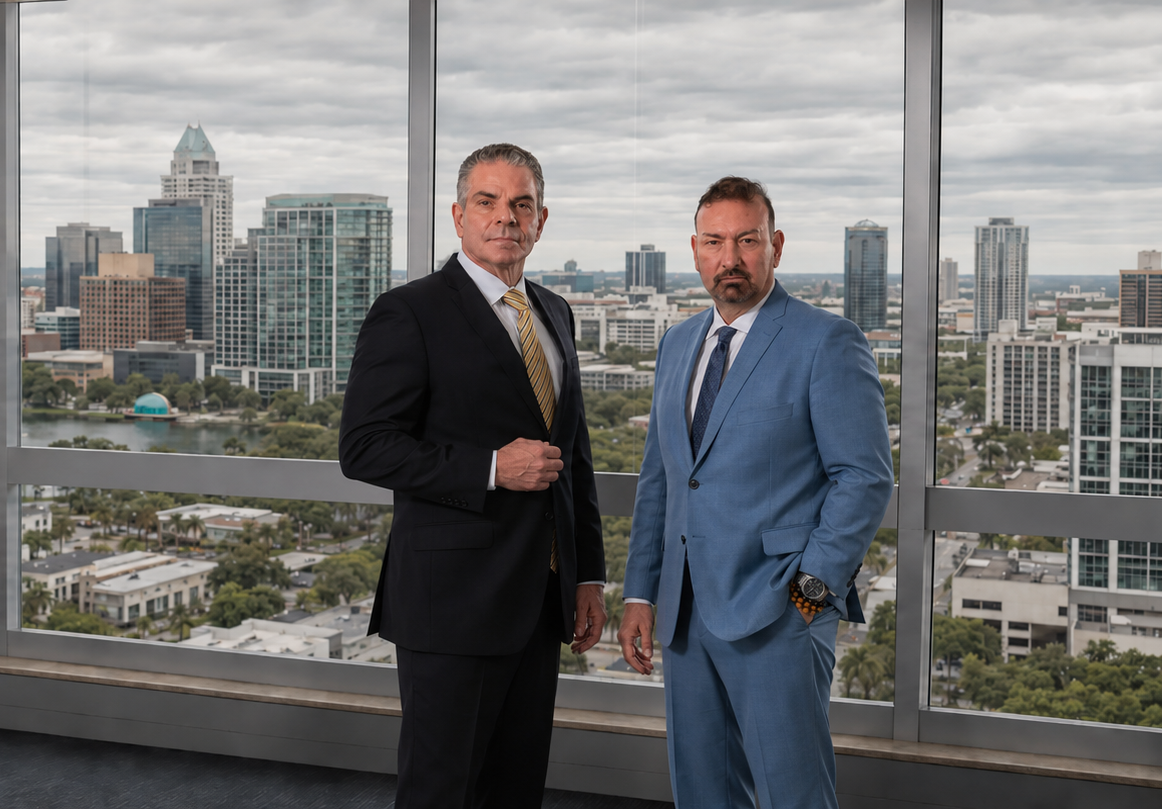
Speak With Our Pembroke Pines Car Accident Lawyers

If accounts still conflict, bring the report, photos and any replies about video or signal records. You can ask for help while pieces are missing. Our  Pembroke Pines car accident lawyers  can review fault, insurance and losses with you.
Miller & Jacobs’ Partners  Mark J. Miller  and  Rick S. Jacobs  handle personal injury matters. No attorney fee unless compensation is recovered for you.

How do the driving rules affect fault?

Florida law treats a circular green light and a green arrow differently. Drivers still must yield to people and traffic lawfully using the crossing. Check which light controlled the movement, beyond the statement “I had green.”  Florida’s signal rule  explains those duties.
A driver turning left must yield to oncoming vehicles in the crossing or close enough to pose an immediate hazard. That also covers vehicles lawfully passing on the left under those conditions. A driver changing lanes must first check that the move is safe. The  left-turn rule  and  lane rule  give the starting points. Apply them to the path, light and timing shown by the evidence.

Match the rule to the evidence

For each driver, 
note the path,
 the light that controlled it and the evidence for that account.
Separate 
what a record shows
 from what remains disputed. A timing plan alone does not show the light at impact.
If you live in Pompano Beach but crashed on Pines Boulevard, our  Pompano Beach car accident lawyers  can help review the same crash-date records. Bring the Pines Boulevard location and crash date when you discuss the claim.

Questions when records are missing

Do not assume so. Ask separately whether the agency or camera owner has relevant video and how it can be kept. The report may identify who responded and which witnesses were listed. Keep replies saying that footage does not exist or is no longer available.

A study describes traffic during its own collection period. It does not measure a specific car during a different crash. Ask what supports a speed claim in your case, such as a useful recording or witness account.

Identify the agency in charge and have the possible claim reviewed.  Florida’s government-claim law  has notice rules and limits on liability. Notice, waiting periods and lawsuit dates need separate checks. An outage complaint or records request may not meet formal claim-notice rules.
The deadline depends on 
the type of claim,
 the parties involved 
and the dates.
 Have it checked promptly while you seek records.
Our  car accident deadline guide  explains which dates to bring when you ask for help.

Start with what the records can prove about your crossing and date. Keep the originals, document gaps and ask promptly about video. A road plan, crash count or report can add context; each has limits when you work out what happened.