For Hollywood families after a fatal injury
After a sudden loss, calls and forms can arrive while your family is still trying to understand what happened. You may be asking who can act, what to keep, or whether a report must be finished first.
Miller & Jacobs helps families review a possible wrongful death claim in Hollywood. We look at the cause, the estate, family ties, and legal dates. Begin with the facts you have and the question that needs an answer today.
Free consultation. Serving Hollywood from our Pompano Beach headquarters.
A first call does not require a complete report or an appointed estate representative.
Headquarters Serving Hollywood
Combined Legal Experience
Combined Jury Trials
Consultation About Your Next Steps
The first caller and the legal plaintiff
Under Florida’s wrongful death law, the deceased person’s personal representative brings the action for eligible survivors and the estate. A spouse, child, or other relative can contact us before that appointment is settled. We review who can act and what the estate process needs.
The person who brings the case and the people whose losses are claimed may be different. Tell us about a will, a probate case, and any concern about who will serve. Making the first call does not make someone the plaintiff or decide their share.
For other injury questions, see our Hollywood personal injury guide. The loss of a loved one calls for a separate review of the estate and family.

Miller & Jacobs
You may be grieving while trying to answer calls, find papers, and help the rest of your family. A first conversation should give you room to explain what you know and what you do not.
We can review the legal work in steps: who can act, which evidence needs attention, and what dates must be checked. You do not have to carry a finished investigation into that conversation.
A manageable first conversation
You need not put the whole event in order before calling. Start with what happened, what you know about the estate, and any request or date causing concern. We can identify gaps without asking you to guess.
See the review steps →01
Give the date, place, and what you were told. Separate what you saw from what another person said. Mention a report number or the person who has the records.
02
Tell us whether there is a will, a lawyer involved, or a court case. If you do not know, say so. Bring any appointment papers already received.
03
Keep a letter asking for a statement, a release, or a response by a set date. A request may need review before the cause of death is fully known.
Four parts of the legal review
A wrongful death case needs evidence of a legal wrong that caused the death. Section 768.19 describes that right of action. A tragic outcome alone does not prove fault. We assess the cause alongside the people and losses covered by the law.
What acts, care, or conditions led to the fatal harm? Reports, witness accounts, records, and qualified review can test the concern against other causes.
Who has been appointed, and what further estate steps are needed? The appointment and claim work must be coordinated, with legal dates checked early.
Which family relationships and support arrangements need review? Tell us about children, a spouse, parents, and relatives who depended on the person.
Which bills, earnings, and estate papers already exist? Keep the originals and identify who paid each expense. Do not change records to make them fit a claim.
Who is included?
Florida’s survivor definitions include a spouse, children, parents, and certain dependent relatives. Each person may not have the same claim. Family ties, ages, support, and the cause of death matter.
The estate’s appointed representative brings the action. Their own family relationship does not decide every other person’s rights.
Identify the spouse and keep records of the marriage. Explain the daily help and household tasks the person provided.
Identify each child and their age. Include children who live elsewhere. Do not leave someone out because they cannot attend the first call.
Identify the parents and who else survives. Share facts about the relationship and the death without assuming that the same rules apply to every family.
Partly or wholly dependent blood relatives and adoptive siblings may qualify. Other family relationships need individual review.
The estate has a role separate from the family. Its records and debts may matter even when the person left few assets.
The Act defines a minor child as under age 25. Do not apply the usual age-18 assumption to this claim.
That is a reason to ask about the next step. The Broward Clerk’s probate overview explains the court process and appointment route. A claim review can identify how estate work and evidence requests need to fit together.
Tell us what you know and what remains unclear. In a free consultation, we can review the possible claim, who can act for the estate, what proof is needed, and legal dates. You do not have to bring a finished case.
Family and estate losses
Florida’s damages statute sets the categories below. Who may recover depends on the survivors and claim. These are possible categories, not a promise of payment.
Support
Eligible survivors may claim lost financial support and the value of services the person would have provided.
Spouse
A spouse may claim lost companionship and protection, and mental pain and suffering.
Children
Qualifying children may claim lost parental guidance and companionship, and mental pain and suffering.
Parents
Parents’ claims for mental pain and suffering depend on the child’s age and other survivors.
Expenses
Who paid the expense affects whether the survivor or estate seeks it. Keep bills and payment records.
Estate
The estate may claim certain lost earnings and future savings, subject to statutory limits.
Section 768.21(8) restricts the listed noneconomic damages for adult children and parents of an adult child in medical-negligence claims. Ask how that rule applies to your family.
A receipt can show who paid a bill. It does not decide who should receive an award. Keep the invoice, receipt, and source of payment together.
The cause shapes the records
The first task is to identify what happened and what evidence may still exist. A crash, care concern, unsafe property, or product failure calls for different records and review. More than one issue may need attention.
Roadways
Keep report details, vehicle photos, towing information, witness names, and care records. Tell us who has the vehicles and whether a request to move or inspect one has arrived.
Commercial Vehicles
Identify the truck, driver, carrier, and businesses involved. Route, upkeep, and electronic records may matter. The family should not have to guess who owned or controlled the truck.
Property
Save the address, time, visit or booking records, and who received the incident report. Video, upkeep records, and notice of a hazard may need to be kept promptly.
Health and Care
Write down the providers, dates, symptoms reported, and what changed. Keep portal messages and records already received. Qualified medical review must test whether a care failure caused the death.
Products and Work
Keep employer and site information, equipment details, and any investigation notice. A construction event may involve several businesses. An unsafe product needs review of the exact item, who had it, and its history.
Water and Recreation
Identify the vessel, operator, waterway, and responding agency. Keep charter or rental terms and witness details. Maritime rules may affect the claim and deadline; do not assume the road-crash route applies.
Hollywood and Broward record holders
An event in Hollywood does not mean every record is held by the same agency or business. Identify the location, date, and names on each document. A fatal care concern may also involve our nursing home claim review.
High-Volume Roads
Use the report number and agency named in the paperwork. Keep towing, repair, and insurer records as well. A police report may help locate proof. It does not decide civil fault on its own.
Property and Security
Keep the booking, lease, or visit details and the incident-report contact. Identify who ran the property and who controlled a camera. The owner and the day-to-day manager may differ.
Waterfront
Write down the vessel name, dock or launch point, and agency that responded. Save messages from an operator or rental company. Do not delay a legal review while waiting for the final investigation report.
Care and Work
List the providers, employer, and any estate case number. Keep a short note of what has been requested and from whom. Let us know if access has been refused or a record is still pending.
Bring what is already available
You need not collect all of these before speaking with us. Save what you have in its original form. A short list of missing records can be more useful than trying to finish the investigation yourself.
01
Event details
Date, place, report number, and the names of people or businesses involved.
02
Death and care records
Documents already received, provider names, and requests that are still pending.
03
Estate papers
Will, appointment order, case number, or letters from a probate lawyer, if any.
04
Family information
Spouse, children and ages, parents, and relatives who relied on the person.
05
Bills and receipts
Funeral and care expenses, who paid them, and any payment plan or unpaid balance.
06
Work and household records
Earnings, benefits, and notes about regular care or tasks the person handled.
07
Requests and offers
Letters, forms, releases, and messages asking you to speak, sign, or reply.
08
Witnesses and existing images
Contact details, saved photos or video, and where the original files are held.
Do not put yourself at risk, enter restricted areas, or alter an item to obtain proof. Tell us about evidence already moved, changed, or lost.
Evidence, authority, and legal dates
These steps often overlap. Estate work may continue while records are sought and the cause is reviewed. The facts and legal dates decide the pace. A first review does not promise that a claim can be brought or will succeed.
01
We start with the event and the question troubling you now. We note what is known, what is disputed, and which documents or requests are already in hand.
02
We check whether someone has been appointed and whether a probate lawyer is involved. The estate and claim work need clear roles. Families should not be left with conflicting advice about who does what.
03
We assess who has the records and what proof needs to be kept promptly. Reports, video, care records, and items may need different requests and permissions.
04
The proof must link a legal wrong to the death. Expert help may be needed. We test an insurer’s account, an allegation, or an unexpected result against the facts.
05
We review the family and estate records that support the losses sought. We check what has already been paid and what proof supports future needs.
06
We review who is releasing claims, how an offer would be divided, and which approvals apply. If a suit is warranted, the parties, right to act, proof, and legal dates must be in place.
Separate processes, shared facts
Police or prosecutors may investigate the same event. Their work can provide useful records, but they do not act as the family’s civil lawyer. Tell us about an ongoing case and any request to speak, sign, or provide documents.
Florida’s filing statute generally allows two years for a wrongful death action. The cause, parties, and exceptions need prompt review. Medical negligence, public entities, intentional acts, or maritime law may change the analysis. Do not assume probate, an insurer’s offer, or a police inquiry pauses the deadline.
Purpose
A criminal case concerns a charged offense. A civil claim concerns legal responsibility and recoverable losses.
Who controls the case
Prosecutors control criminal charges. The personal representative brings the wrongful death action with civil counsel.
What must be proved
The cases use different standards and legal rules. A charge, dismissal, or verdict does not automatically settle the civil claim.
Dates to protect
The family’s filing dates need their own review. Ask about them while official records and estate work are still pending.
Serving Hollywood from Pompano Beach
Miller & Jacobs serves Hollywood families from our Pompano Beach office. Start by calling about the concern and documents you have. Ask about the next conversation and any records we need before making a trip.
1600 S. Federal Highway, Suite 1101
Pompano Beach, FL 33062
Meet the partners
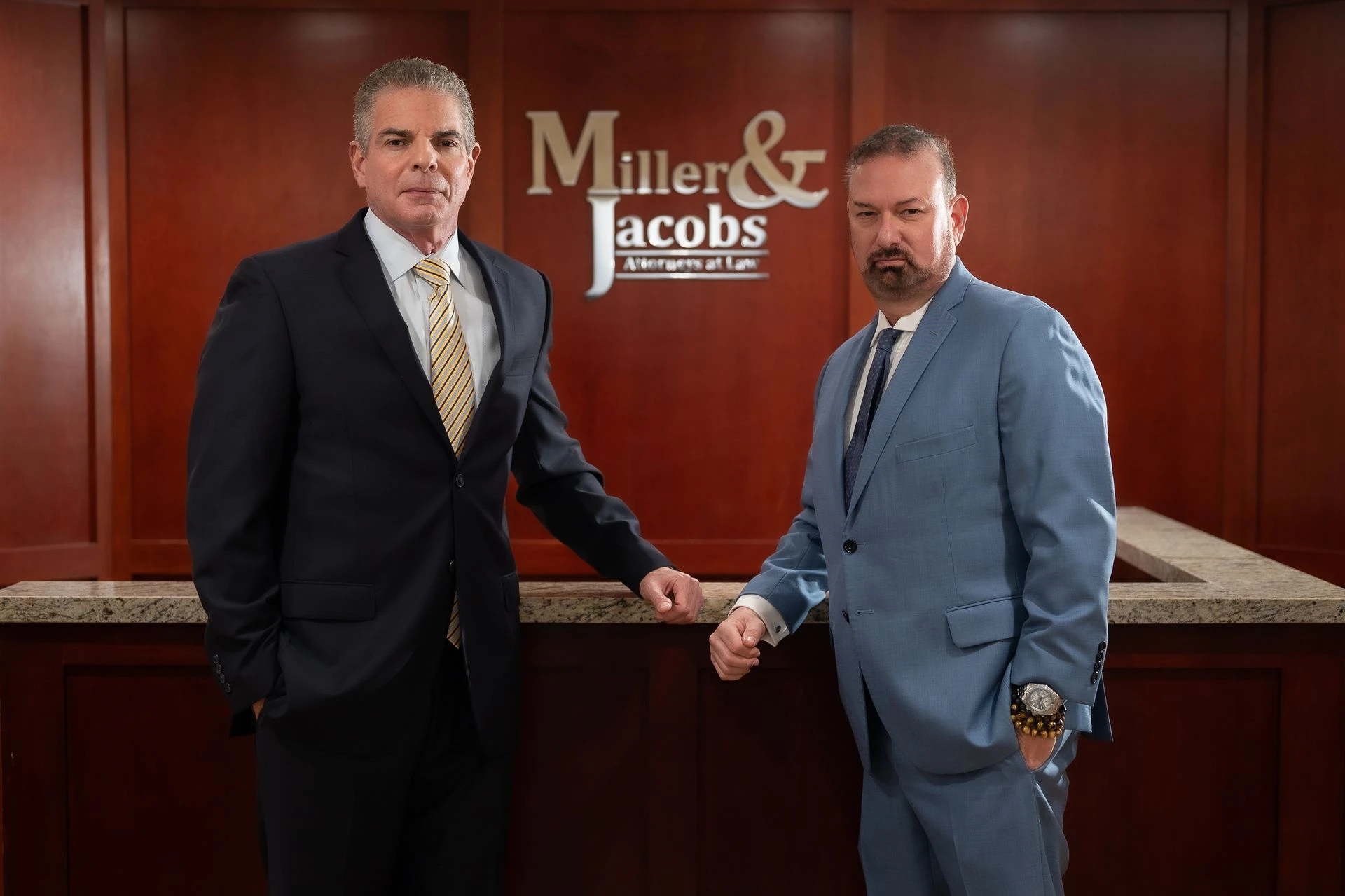
Mark Miller and Rick Jacobs are partners in the firm. Their biographies explain their backgrounds. Ask how the cause, estate work, family concerns, and next legal step would be reviewed in your case.

Partner
Mark Miller is a partner at Miller & Jacobs. Read his background and bring your questions about the evidence and claim process.

Partner
Rick Jacobs is a partner at Miller & Jacobs. Read his background and ask what records and legal review your family may need.
Every matter needs its own review. Our discussion should make the next step clear without promising an outcome.
Questions before every answer is known
These answers are a starting point. The event, family relationships, estate status, and applicable law still need review in your case.
No. A legal wrong must have caused the death and supported a claim had the person lived. We review the concern against the proof, other possible causes, and the law that applies. An unexpected result alone does not answer that question.
Yes. Tell us who you are, what happened, and what is known about a will or probate case. A first caller need not be the appointed representative. The claim must still be brought by the proper person. We can identify the authority and evidence questions that need attention.
Do not make that assumption. Tell us which reports are pending and who holds them. We can review the known facts, proof that may need to be kept, and legal dates. An unfinished report may limit what we can assess. It is not a reason to leave the deadline unchecked.
Keep the full request, attachments, messages, and any response date. Ask what the statement or release covers and who can give it. Do not guess about events you did not see. A payment offer needs review of the claims and people it would cover.
A relative can seek advice, but the wrongful death action is brought by the personal representative for the survivors and estate. Tell counsel about other lawyers, family concerns, or an existing case. Those roles need to be clarified before anyone assumes they can settle the whole matter.
Yes. Florida law restricts certain noneconomic damages for adult children and parents of an adult child in medical-negligence claims. The family relationships and cause need individual review. Do not assume that the rules for a fatal road crash apply unchanged to a care claim.
Keep the allegation and the evidence offered for it. Florida’s comparative fault law can reduce recovery and bars recovery when a person is more than 50 percent at fault for their own harm in covered actions. Medical negligence has a statutory exception. Fault and the rules that apply need careful review.
Keep copies of each bill, receipt, and payment record together. Note who paid and whether a balance remains. Share them with the person coordinating the legal review. Avoid sending away the only original. The payment history helps counsel assess the proper claim and avoid counting a bill twice.
Yes. Tell us when it was moved, why, and who has it now. Save towing, storage, return, or disposal records and existing images. Missing or changed evidence can make proof harder. We assess what remains without promising that those records will be enough.
Tell us about the disagreement and any appointment already made. Keep court papers and messages about the issue. The estate’s authority, each lawyer’s role, and the family’s separate concerns need clear review. Do not sign for another person or assume a family vote settles the court appointment.
