Pompano Beach & Orlando | Serving Clients Across Florida
Call Today: 877-848-5297

Florida motorcycle injury claims

How Much Is Pain and Suffering Worth for a Motorcycle Accident?

By Miller & Jacobs Accident Attorneys

There is no fixed sum for pain and suffering after a motorcycle crash. Start with what the injury changed and how long those effects lasted. Look for proof of future limits. Fault, the claim’s legal rules and insurance coverage also affect what may be recovered.
A bill or online calculator cannot answer that question on its own. For an Orlando crash, an  Orlando motorcycle accident lawyer  can review your records and insurance. The review should explain the basis for any proposed settlement.
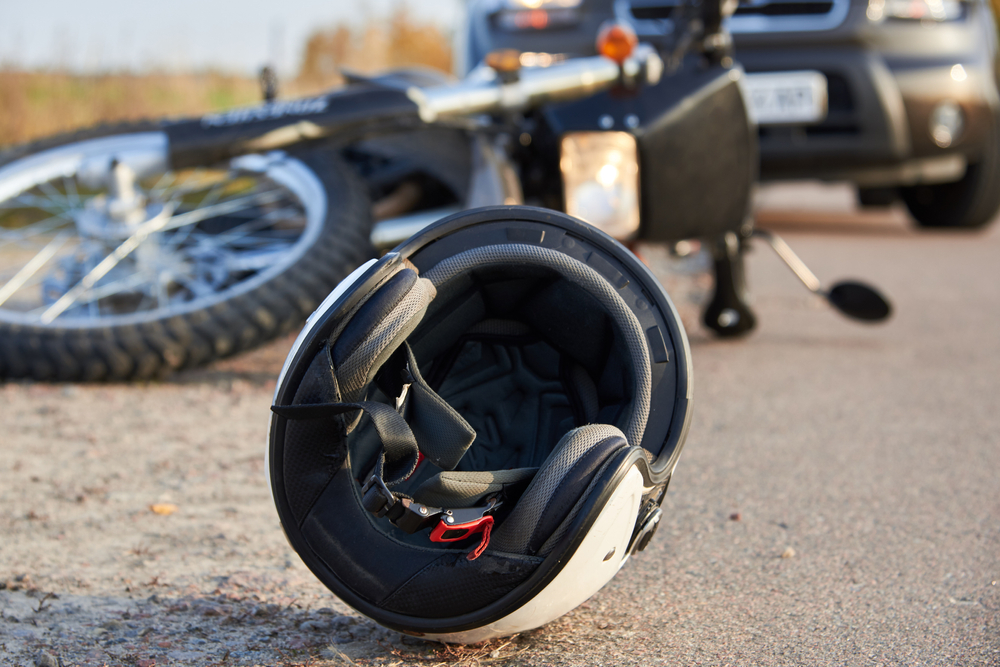
Helmet on the road beside a fallen motorcycle

What does pain and suffering cover?

Pain and suffering is part of non-economic loss: harm that does not come with a receipt. Florida’s  personal injury jury instruction 501.2  lists several types of harm. These include physical pain, mental anguish, disability, disfigurement, inconvenience and loss of the ability to enjoy life. The facts and law decide which apply.

Physical pain

Describe where it hurts, how often, and which movements bring it on. Include changes during treatment and recovery, rather than a single pain score with no context.

Daily limits

Explain tasks that became harder: washing, climbing stairs, driving, caring for a child or doing a job. Note whether you stopped the task, needed help or took more breaks.

Mental and social effects

Describe actual changes in sleep, mood, relationships or activities. A diagnosis such as post-traumatic stress disorder (PTSD) needs a clinical basis. Fear after a crash does not establish that diagnosis by itself.

Medical expenses and lost income are separate financial losses. Keep records for both categories. A large treatment bill does not automatically prove a large pain-and-suffering loss.

Build a clear record of what changed

Start with care records and a dated timeline

Keep visit notes, test results, discharge papers, care plans and work limits. List when each symptom began and what care you received. Note what improved and what remained. Tell your care provider about symptoms and prior injuries. The record should reflect your actual history.

A short journal can add detail that a bill lacks. Record the date, the task you tried, the problem you had and any help you needed. For example, “I could stand at the kitchen counter for ten minutes before sitting down” says more than “I had a bad day.” If an entry is written later from memory, say so.

Stethoscope on a calculator displaying medical cost

Use specific examples and original records

Save dated photos of visible injuries and messages about missed activities. Keep work schedules and records of help at home. Preserve the originals. Our  crash evidence guide  covers records and preservation requests. A family member or coworker can describe changes they saw. They should make clear what they saw themselves and what you told them.

Record good days as well as difficult ones. Be clear about tasks you can do with limits and those you cannot do. Explain if you stopped for some other reason. That detail helps show the loss without overstating it.

An injury’s name alone does not show how severe it is. Cleveland Clinic’s  road rash guidance  explains that depth and extent matter. The CDC notes that  concussion symptoms can appear hours or days later.  They may affect thinking or sleep. Seek medical care for symptoms. An article cannot diagnose their cause.

Separate past effects from future effects

Past limits can be tied to dates and records. Future damages need proof of effects you are reasonably certain to experience. Ask the treating clinician about the outlook and what remains uncertain. A scan, a scar or a course of therapy is not proof of lifelong harm on its own.

Prior health problems also need a fair account. Explain what you could do before the crash and what changed afterward. Address other possible causes and any gaps in care. Do not assume that every later symptom came from this accident.

A driver claim and a UM claim have different rules

An ordinary motorcycle negligence claim

A rider hurt while on a two-wheeled motorcycle has different rules from a car occupant under Florida’s no-fault law. In  Scherzer v. Beron,  the court addressed the rider’s suit against the driver. It held that the rider did not have to meet the no-fault injury threshold to seek pain-and-suffering damages. The rider still had to prove the claim and the harm.
The current  no-fault definition of a motor vehicle  uses four or more wheels. Do not assume a car’s personal injury protection (PIP) benefits or PIP care deadline apply to a rider hurt on a two-wheeled motorcycle.

A claim under uninsured motorist coverage

Uninsured or underinsured motorist coverage is often called UM. It needs a separate policy review.  Section 627.727(7)  sets a threshold for the UM insurer’s liability for pain, suffering, mental anguish and inconvenience. Unless the policy provides broader coverage, the injury must fit a category in  section 627.737(2):

Significant and permanent loss of an important bodily function.

Permanent injury within a reasonable degree of medical probability, other than scarring or disfigurement.

Significant and permanent scarring or disfigurement.

Death.

A policy may provide broader coverage than the statute requires. The Florida Supreme Court recognized this in  Dauksis v. State Farm.  Have the full policy, endorsements and applicable law checked. The driver claim’s rule does not by itself decide the UM claim.

Fault and coverage affect the recovery

The proof must address the crash as well as the injury. Photos, witness accounts and video may help test a disputed turn or lane change. Riding a motorcycle does not itself decide who caused the crash.

The applicable  Florida comparative-fault law  can reduce damages for your share of fault. In covered negligence actions, a person found more than 50 percent at fault for their own harm cannot recover damages. Check which version applies. The  2023 law has filing and insurance-contract transition rules.

Ask which policies cover the crash and who is insured. Check the limits and exclusions. A policy limit is not a promised payment or a measure of the injury. Coverage may be disputed or too small for the loss. A review should explain other possible sources of recovery and the limits of collecting them.

Person with a bandaged wrist supported by a sling

Review an offer without a multiplier

Florida's damages instruction does not set an exact scale for non-economic loss. It calls for an amount supported by the evidence. Multiplying medical bills by a chosen number, or treating a day's wages as a price for pain, does not establish what a particular claim is worth.

An offer review should explain the proof of past and future harm. It should address disputed facts, coverage and what the release would end. Ask which records or medical opinions are still missing. Another person’s verdict or settlement cannot set your amount. The injuries, proof, fault or policies may differ.

Ask what would reach you

The gross settlement and the amount you receive are different. Our  settlement guide  explains fees, costs and repayments. Its car PIP rules do not apply to a rider injured on a two-wheeled motorcycle. Ask for an estimate of lawyer fees, case costs and any valid medical repayment claims. Find out who is claiming repayment and why. Check whether the amount is final. Do not treat every bill as an automatic deduction.
The  Florida Bar’s fee guidance  distinguishes fees from costs. A contingency agreement must be in writing and signed. It must explain the fee method and cost terms. Costs may still be owed without a recovery, depending on the contract. Ask how costs affect the fee. Request an itemized closing statement if there is a recovery.

Check dates before waiting for an offer

Section 95.11(5)(a)  sets a general two-year period for negligence suits. Under the  2023 transition provision,  the shorter deadline applies to claims that legally arose after March 24, 2023. Earlier claims and exceptions need their own date review. Other legal theories, including a UM contract claim, need separate analysis.

Policy notice duties and lawsuit deadlines are separate. Follow applicable notice and cooperation duties in your own policy. Do not assume that a pending claim or settlement talks extend the time to sue.

Speak With Our Motorcycle Accident Lawyers
Attorney Rick S. Jacobs
Rick S. Jacobs , Orlando Motorcycle Accident Lawyer
Partner

Bring the crash report, insurance papers, care records, work-loss records and a short account of daily limits. You can ask for advice even if some records are missing. Explain what you know and what still needs to be checked.

Ask which claims may apply, what evidence is needed, how fees and costs work, and what could change an estimate. Miller & Jacobs can discuss those questions with you. A review should give you reasons and options, rather than a promised dollar figure.

Motorcycle pain-and-suffering questions

No single average establishes your claim's value. The review needs evidence of your injuries, recovery, daily limits and future effects, along with fault and available coverage. A medical-bill multiplier does not supply that evidence.

Under Scherzer, the no-fault injury threshold does not apply to an ordinary driver claim by a rider hurt while on a two-wheeled motorcycle. A UM insurance claim is different. Its statutory threshold and policy terms must be checked.

Returning to work does not by itself resolve a pain-and-suffering claim. Describe any supported limits, extra breaks, changed duties or symptoms during work and outside it. Be accurate about what you can do and any improvement.

Not necessarily. Lawyer fees, case costs and valid repayment obligations can affect the amount that reaches you. Ask for the contract terms and a written distribution estimate. Fees and costs are separate, and costs may be owed even without a recovery under the agreement.