MOTORCYCLE CRASH HELP FROM A POMPANO BEACH FIRM
After a motorcycle crash, injuries, bills, and insurance questions can arrive at once. Miller & Jacobs can preserve the physical evidence, identify available coverage, and build a claim around what the crash has changed in your life.
Our headquarters is in Pompano Beach. The consultation is free. There is no attorney fee unless compensation is recovered for you.
You do not need every record or every answer before calling.
START HERE
•
Where and when it happened
•
What injuries or treatment followed
•
Who has contacted you about insurance
•
Where the motorcycle, helmet, and gear are now
HEADQUARTERS
1600 S Federal Highway, Suite 1101
COMBINED EXPERIENCE
Both partners admitted to The Florida Bar in 1995
COMBINED JURY TRIALS
Reported courtroom experience across the firm’s partners
INITIAL CONSULTATION
No attorney fee unless compensation is recovered
THE FIRST HOURS AND DAYS
The first steps are about your health and preserving what already exists, not proving the entire case at the roadside. A rider can begin with four practical moves.
Start With What You Have →01
Adrenaline can mask symptoms. Follow the treatment plan and report new pain, dizziness, weakness, or other changes.
02
Do not repair, sell, or dispose of the bike before its damage, components, and condition are documented.
03
Impact marks, tears, abrasion, and damaged protective equipment may help explain the force and mechanics of the crash.
04
Keep the report number, photos, witness contacts, towing details, receipts, and every message from an insurer.
WHAT THE CLAIM HAS TO PROVE
A reliable claim connects the crash mechanics, the available coverage, the medical course, and the effect on work and daily life. Missing one of those pieces can distort the whole picture.
CRASH MECHANICS
Left turns, unsafe lane changes, following distance, distracted driving, roadway conditions, and vehicle defects all require different records.
PHYSICAL EVIDENCE
Bike and vehicle damage, debris, gouge marks, video, witness accounts, and electronic data may confirm or contradict the first story.
COVERAGE REVIEW
Liability, uninsured or underinsured motorist coverage, health benefits, commercial policies, and property coverage must be reviewed.
RECOVERY NEEDS
Treatment, rehabilitation, time away from work, future care, transportation, home support, and lasting limitations should be documented.
MOTORCYCLE COVERAGE IS DIFFERENT
That does not mean there is no insurance path. It means the coverage review usually starts somewhere else, and assumptions based on an ordinary car claim can be wrong.
COVERAGE SOURCE
MAY ADDRESS
WHAT MUST BE CHECKED
At-fault driver liability
Bodily injury losses caused by the other driver
Fault evidence, policy limits, exclusions, ownership, and whether the driver was working
Your UM/UIM coverage
Losses when the at-fault driver has no coverage or too little
Motorcycle and auto policy language, stacking, household policies, notice, and offsets
Health insurance or medical benefits
Emergency care, surgery, rehabilitation, and follow-up treatment
Deductibles, copays, liens, reimbursement rights, and network requirements
Collision and property coverage
Motorcycle, helmet, riding gear, and custom equipment
Declared value, custom-parts endorsements, depreciation, salvage, and appraisal evidence
Coverage depends on the facts and the actual policy language. The policies should be reviewed before anyone assumes a source applies or does not apply.
EVIDENCE PEOPLE OFTEN OVERLOOK
The police report matters, but it is rarely the entire investigation. Physical evidence and independent records can answer questions that a diagram or short narrative cannot.
Damage height, direction, paint transfer, broken parts, tire marks, and repair records may help explain contact and movement.
Scrapes, tears, deformation, and impact points may help document the force, sequence, and areas of the body involved.
911 audio, dispatch logs, EMS records, body-camera footage, traffic timing, and roadway-maintenance records may exist.
Nearby businesses, traffic systems, vehicles, phones, navigation apps, and dash cameras may hold time-sensitive evidence.
COUNTERING THE “RECKLESS RIDER” SHORTCUT
An adjuster may suggest speed, visibility, lane position, or rider behavior before the physical evidence has been collected. Those assumptions should be tested against the scene, vehicles, witnesses, video, and timing.
“I did not see the motorcycle” is not a complete explanation. Drivers still have duties to look, yield, signal, maintain a safe distance, and check before turning or changing lanes.
Discuss the Evidence →Signal timing, sight distance, speed, point of impact, and the turning vehicle’s path can clarify right-of-way.
Mirror position, turn signals, vehicle damage, witness accounts, and video may show whether the lane was clear.
Independent footage and accounts may resolve disputes about speed, lane position, traffic lights, and evasive action.
Potholes, debris, standing water, work zones, missing signs, and maintenance history may point to other responsible parties.
Measurements, vehicle damage, debris fields, gouge marks, and electronic data can test competing versions of the crash.
A driver’s employer, vehicle owner, contractor, delivery company, or maintenance provider may have relevant records and coverage.
THE INJURY RECORD
A motorcycle injury may affect mobility, work, sleep, independence, appearance, relationships, and future care. The medical file should connect with the day-to-day record.
Headaches, memory changes, dizziness, mood changes, fatigue, vision problems, and concentration limits may develop over time.
Surgery, hardware, restricted motion, weight-bearing limits, physical therapy, and arthritis risk can affect long-term recovery.
Wound care, infection risk, grafts, sensitivity, disfigurement, and clothing or sun limitations deserve complete documentation.
Radiating pain, numbness, weakness, surgery, injections, and functional limits may change work and ordinary movement. When a crash causes a spinal cord injury, the claim may also need to address paralysis, transfers, wheelchairs, home access, transportation, paid support, and future care.
Organ damage, rib fractures, pulmonary complications, and follow-up monitoring may not be visible at the scene.
Sleep, travel, driving, return to riding, family roles, recreation, and confidence in traffic may all be affected.
WHEN THE OTHER DRIVER HAS TOO LITTLE INSURANCE
A complete coverage review can reveal policies and responsible parties that are not obvious from the crash report. Each source has its own notice rules, exclusions, and proof requirements.
COVERAGE 01
Confirm the at-fault driver’s bodily injury limits, ownership, household policies, umbrella coverage, and whether a business was involved.
COVERAGE 02
Review motorcycle and auto policies for uninsured or underinsured motorist coverage, stacking, household coverage, and notice terms.
COVERAGE 03
A working driver, delivery vehicle, fleet owner, contractor, or platform may bring additional records and insurance into the case.
COVERAGE 04
A defective component, negligent repair, hazardous work zone, or poorly maintained roadway may require a separate investigation.
Florida generally allows two years for a negligence-based injury lawsuit, but video can be erased, vehicles can be repaired, and government or insurance notice periods may be shorter. Evidence preservation should begin well before the filing deadline.
WHAT THE CLAIM SHOULD MEASURE
There is no automatic formula for a motorcycle case. Medical records, employment evidence, expert opinions, photographs, testimony, coverage, and long-term limitations shape the value.
LOSS CATEGORY 01
Emergency care, surgery, medication, therapy, equipment, transportation, home assistance, and reasonably supported future treatment.
LOSS CATEGORY 02
Missed pay, used leave, lost benefits, reduced hours, job changes, retraining, and diminished earning capacity when supported by evidence.
LOSS CATEGORY 03
Physical pain, emotional distress, disability, scarring, loss of enjoyment, sleep disruption, and limits on independence and family roles.
LOSS CATEGORY 04
Repair or total-loss value, helmet, clothing, accessories, custom equipment, towing, storage, rental transportation, and appraisal issues.
HELP FROM OUR POMPANO BEACH HEADQUARTERS
Miller & Jacobs meets clients at its Pompano Beach headquarters on South Federal Highway and can also speak by phone or video. The firm’s local personal injury lawyers represent injured motorcyclists across Broward County and throughout Florida.
POMPANO BEACH OFFICE
1600 S Federal Highway, Suite 1101
Pompano Beach, FL 33062
954-465-8733
EXPERIENCE YOU CAN VERIFY
Mark Miller and Rick Jacobs bring backgrounds in prosecution, insurance defense, civil litigation, negotiation, and jury trials.
REPORTED RECOVERIES
COMBINED JURY TRIALS
BOTH ADMITTED TO THE FLORIDA BAR
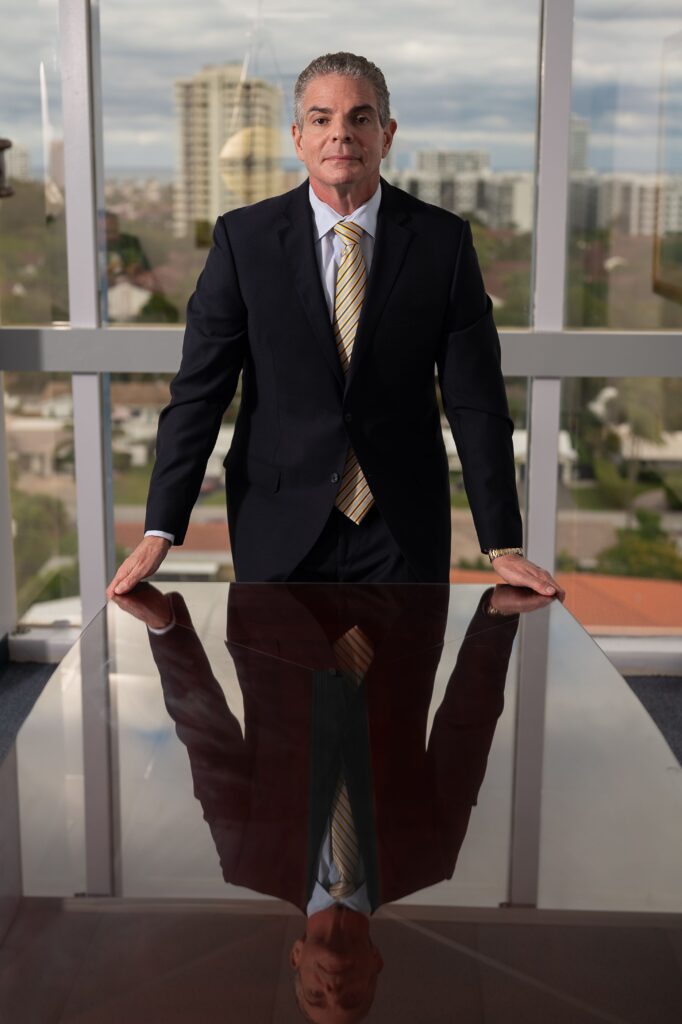
PARTNER
Former Assistant State Attorney, former insurance-defense lawyer, and more than 70 reported jury trials.
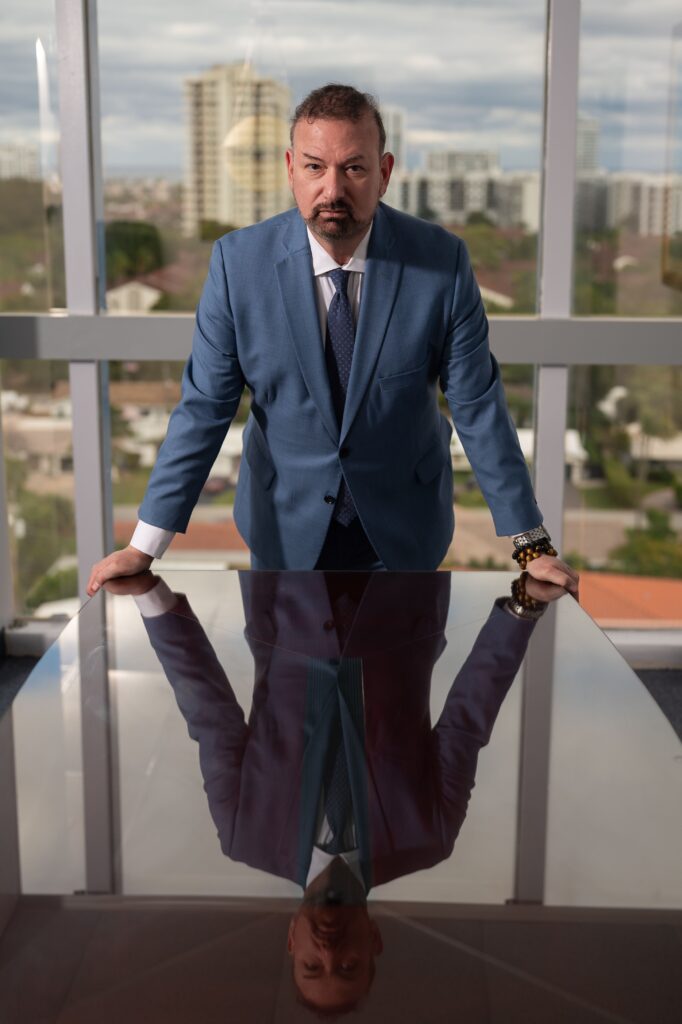
PARTNER
Former Miami-Dade Assistant State Attorney with more than 160 reported jury trials.
Past results do not guarantee a similar outcome. Every matter depends on its facts, evidence, injuries, available coverage, and applicable law.
QUESTIONS RIDERS AND FAMILIES ASK FIRST
These answers provide a starting point. Policy language, injuries, fault evidence, and the parties involved can change the analysis.
?
Get needed medical care, report the crash, photograph what you safely can, collect witness information, and preserve the motorcycle, helmet, and gear. Avoid guessing in a recorded statement or signing a broad release before you understand it.
?
Failure to see a motorcycle is not automatically a defense. Drivers must keep a proper lookout, yield, signal, follow safely, and check before turning or changing lanes. Scene evidence, video, witnesses, and vehicle damage can test the explanation.
?
Do not decide the percentage yourself. Florida comparative-fault rules can reduce compensation based on an assigned share of fault, and a party found more than 50% responsible may be barred in a negligence claim. Evidence can materially change that allocation.
?
Not until the damage and relevant components have been preserved and documented. Repair or disposal can remove evidence about impact location, mechanical condition, custom parts, and the force of the collision.
?
Florida’s no-fault PIP system generally does not cover injuries sustained while occupying a motorcycle. Medical bills may instead involve health insurance, medical-payments coverage, the at-fault driver’s liability coverage, UM/UIM coverage, or other sources.
?
Possibly. Not wearing a helmet does not cause another driver to turn left, rear-end a motorcycle, or make an unsafe lane change. An insurer may argue that helmet use affected a particular head injury, so causation and medical evidence matter.
?
Your own UM/UIM coverage may apply, depending on the policy. A commercial policy, employer, vehicle owner, household policy, roadway entity, repair shop, or component manufacturer may also require investigation in the right case.
?
Florida generally provides two years for a negligence-based injury action. Some claims and notice requirements are shorter, and evidence may disappear much sooner, so waiting until the deadline can harm the investigation.
YOUR NEXT STEP CAN BE SIMPLE
Tell Miller & Jacobs what happened, what changed afterward, and what you have heard from the insurers. You do not need every record before asking for help.
POMPANO BEACH HEADQUARTERS
⌖ 1600 S Federal Highway, Suite 1101
Pompano Beach, FL 33062
☎ 954-465-8733
◷ Free and confidential consultation
RELATED POMPANO BEACH RESOURCES