Pompano Beach Defective Product Help
A defective appliance, battery, vehicle component, medical device, tool, machine, children’s product, or marine product can cause injuries that make no sense until the product is examined closely.
Miller & Jacobs helps injured people identify the exact unit, preserve the records around it, trace the companies that put it into use, and connect the failure to the harm that followed.
Our headquarters is in Pompano Beach. The consultation is free, and there is no attorney fee unless compensation is recovered for you.
Do not return, repair, discard, alter, or hand over the product before asking how it should be preserved.
Brand, model, serial number, lot code, date code, software version, and component identity can separate one product from another.
A matching recall may provide a useful lead. A product can still require investigation when no recall appears.
Designers, component makers, importers, distributors, sellers, installers, rental companies, and repairers may require review.
Florida limitations, discovery, repose, wrongful death, contract, maritime, and other rules can point to different dates.
The First Priority
The product’s condition may show what failed, whether a component separated, whether a warning or guard was present, and whether the unit changed after the incident.
Photographs help, but they do not always replace the unit. A
Pompano Beach personal injury lawyer
can coordinate preservation with the medical, insurance, income, and future-care issues that shape the claim.
Large, contaminated, fire-damaged, vehicle-mounted, or business-controlled products may require a tailored preservation plan.
Do Not
The failed unit, broken pieces, removed component, residue, and packaging may all matter.
Do Not
Changing the condition can make it harder to determine what existed immediately after the incident.
Do Not
A return request, warranty claim, recall remedy, or insurance inspection should be coordinated with preservation in mind.
Do
Record what you can safely without turning the product back on or creating another risk.
Safety comes first. A product that is hot, energized, pressurized, contaminated, leaking, unstable, or powered by a damaged lithium-ion battery may require emergency or professional handling.
How the Failure Is Framed
A case may involve more than one theory. The correct path depends on the product, its intended and foreseeable uses, the evidence, and the law that applies.
01 · Manufacturing
A material, fastener, weld, battery cell, seal, wire, medication batch, or assembled component may differ from the intended specifications even when the broader design is sound.
02 · Design
The investigation may compare risk, utility, feasible alternatives, guards, tolerances, foreseeable conditions, and whether a safer design could have reduced the harm.
03 · Warning or Instruction
Placement, wording, visibility, language, instructions, maintenance requirements, contraindications, software prompts, and post-sale notices may matter.
Strict liability, negligence, and warranty theories may overlap, but every claim still requires proof of the product, defect or conduct, causation, and loss.
Product Identity and History Ledger
Unit Identity
Capture identifiers from the unit, packaging, receipt, registration, medical record, vehicle, or equipment file.
Acquisition
Save receipts, orders, rental agreements, delivery records, registration emails, and payment history.
Use
Document setup, load, speed, charging, maintenance, conditions, instructions followed, and other users.
Failure
Record movement, breakage, smoke, heat, ignition, loss of control, separation, alarms, software behavior, or missing protection.
Changes
Service records can identify prior work, replacement parts, and earlier complaints.
Data
Digital records may be lost when a device is reset, returned, updated, or disconnected.
Start With the Exact Unit
Identical-looking products may contain different components, software, manufacturing lots, suppliers, or recall coverage. Identify the exact unit before drawing conclusions.
Acquisition records can reveal marketplace sellers, importers, distributors, employers, installers, and component suppliers that may require investigation.
You can start with a label photograph, the product name, where it came from, and a short description of the failure.
Recall Research
Recall databases can identify reported hazards, affected serial ranges, remedies, and involved companies. The result must match the actual product, not just its brand or type.
A product can fail before a recall, outside its covered range, or for a different reason. A recall also does not prove what caused a particular injury.
Before accepting a refund, repair, replacement, or destruction remedy, determine whether the product and related records should be preserved.
Recall and Safety Resources
Match the exact unit, not just the brand.
Investigation Note
A match may identify a reported hazard and remedy. A non-match means the product and available records still require review.
Consumer Products
Appliances, batteries, furniture, tools, recreation products, and children’s products.
Search CPSC recalls →Vehicles and Equipment
Vehicles, tires, car seats, trailers, and equipment searchable by VIN, make, model, or component data.
Search NHTSA recalls →Medical Products
Medical devices, drugs, biologics, and other FDA-regulated products.
Search FDA safety alerts →Who May Require Investigation
A distribution chain can include separate companies with different roles. The documents, contracts, labels, registrations, invoices, and component records help show who did what.
Stage 01
May control specifications, warnings, testing requirements, tolerances, materials, software, and safety features.
→
↓
Stage 02
May build the finished unit or a critical component under its own process or another company’s specifications.
→
↓
Stage 03
May bring the product into the United States, hold regulatory records, and connect an overseas maker to domestic distribution.
→
↓
Stage 04
May store, transport, relabel, bundle, or supply the product to retailers, contractors, employers, or rental companies.
→
↓
Stage 05
May hold order data, customer complaints, return history, inspection records, and information about the exact unit.
→
↓
Stage 06
May affect assembly, calibration, updates, replacement parts, maintenance, warnings, and the product’s condition.
Products That Can Cause Serious Harm
The evidence plan changes with the product. Batteries, vehicle components, medical devices, industrial equipment, home products, and marine equipment require different preservation and technical review.
Power and Heat
Possible issues include fire, shock, unexpected activation, missing shutoffs, or inadequate charging instructions.
Roadway Products
A failure may cause a crash, reduce control, or increase injury severity.
Work and Construction
Review the maker, supplier, installer, maintenance company, and replacement parts.
Children and Home
Tip-over risk, entrapment, sharp edges, toxic exposure, flammability, and warnings may matter.
Health Products
Review regulatory history, prescribing decisions, healthcare records, federal law, and product-specific defenses.
Water and Recreation
Maintenance, corrosion, installation, rental records, and maritime law may intersect.
The Product Is Still Available
Tell us what the product was, where it is now, what happened, and whether anyone has asked to inspect or take possession of it.
What the Case Must Connect
The evidence must connect the product, defect or conduct, use, injury mechanism, and resulting losses.
Link 01
Document the exact unit, labels, warnings, software, damage, and post-incident condition.
Link 02
Use records, testing, complaints, service history, standards, and warnings to explain the failure.
Link 03
Show how the defect caused the incident, injury, or increased harm.
Link 04
Document medical care, future needs, income changes, disability, property damage, and other recoverable harm.
Florida Filing Periods
Deadlines depend on the facts. Product age, discovery, death, contracts, government involvement, maritime law, and other circumstances can change the analysis.
4
The start date may depend on when the relevant facts were discovered or should have been discovered with due diligence.
Florida wrongful death actions generally have a two-year period, but product-specific rules must also be reviewed.
Florida imposes outside limits tied to delivery of many products, with different treatment and exceptions for certain products and circumstances.
Government notice, medical negligence, contract, warranty, federal, maritime, and other claims may use different dates.
Products and records can disappear before a filing deadline expires. Preservation should not wait for the last legal day.
Read the current
and
product accrual and repose statute.
These sources provide general law, not a deadline calculation for a specific case.
Misuse, Modification, and Fault
Manufacturers and insurers may argue that the user ignored instructions, exceeded limits, modified the product, neglected maintenance, or caused the incident.
The investigation should distinguish foreseeable use from unexpected conduct, identify who changed the product, determine whether that change caused the harm, and examine the warnings and safeguards.
Florida comparative-fault law may reduce recovery based on an injured person’s percentage of fault and, in covered negligence actions, may bar recovery above 50 percent responsibility. Evidence about use, instructions, training, maintenance, and the failure sequence is critical.
Question 01
The real setting and reasonably predictable use both matter.
Question 02
A seller, installer, employer, repairer, prior owner, or software update may have altered it.
Question 03
An instruction violation matters only when it connects to the failure and harm.
Question 04
Review visibility, clarity, placement, timing, language, guards, alarms, interlocks, and shutoffs.
What the Injury Has Cost
Available damages depend on the claim and supported facts, including personal injury, property damage, enhanced injury, and wrongful death.
Medical
Treatment, surgery, medication, rehabilitation, specialists, devices, follow-up, and supported future needs.
Income
Time away, reduced hours, job changes, lost opportunities, and supported effects on earning ability.
Function
Mobility, cognition, household roles, transportation, equipment, and help from others. A defective vehicle, medical device, workplace product, or safety component can cause or worsen a spinal cord injury, making product evidence and future-care evidence part of the same claim.
Human Harm
Support non-economic harm with medical records, photographs, testimony, routines, and evidence of change.
Property
A failed product can damage a home, vehicle, boat, business, contents, or other property.
Fatal Loss
Florida law may provide separate loss categories for the estate and permitted survivors.
Pompano Beach Product Context
The setting can identify witnesses, sellers, service companies, employers, surveillance, public records, healthcare providers, and the product’s path before the injury.
Homes and Condominiums
Association notices, maintenance vendors, electrical work, fire response, order records, and neighboring units may matter.
Roads and Vehicles
Tires, brakes, steering, restraints, airbags, seats, lighting, motorcycles, bicycles, scooters, trailers, and replacement parts may affect cause or injury severity.
Marinas and Waterways
Ownership, rental, repair, installation, Coast Guard, FWC, and maritime records may matter.
Work and Medical Settings
Employer control, training, service vendors, workers’ compensation, third-party claims, and device records may intersect.
01
Secure custody, prevent alteration, preserve pieces and packaging, and document the condition safely.
02
Record model, serial, lot, VIN, UDI, receipt, seller, rental, employer, delivery, and registration details.
03
Preserve manuals, warnings, repairs, software updates, complaints, service records, and recall information.
04
Engineering, medicine, fire origin, human factors, vehicle systems, metallurgy, electronics, or toxicology may be needed.
05
Trace designers, manufacturers, suppliers, importers, distributors, sellers, installers, repairers, owners, and insurers.
06
Connect the failure to treatment, work changes, future needs, property loss, and other documented harm.
How the Investigation Moves
Stabilize the product before destructive examination, identify the exact unit before relying on recalls, and map the distribution chain before assuming only one company is responsible.
Technical proof and the injury record must develop together. Either one may be incomplete without the other.
You can start with the facts and records already available.
A Pompano Beach Office
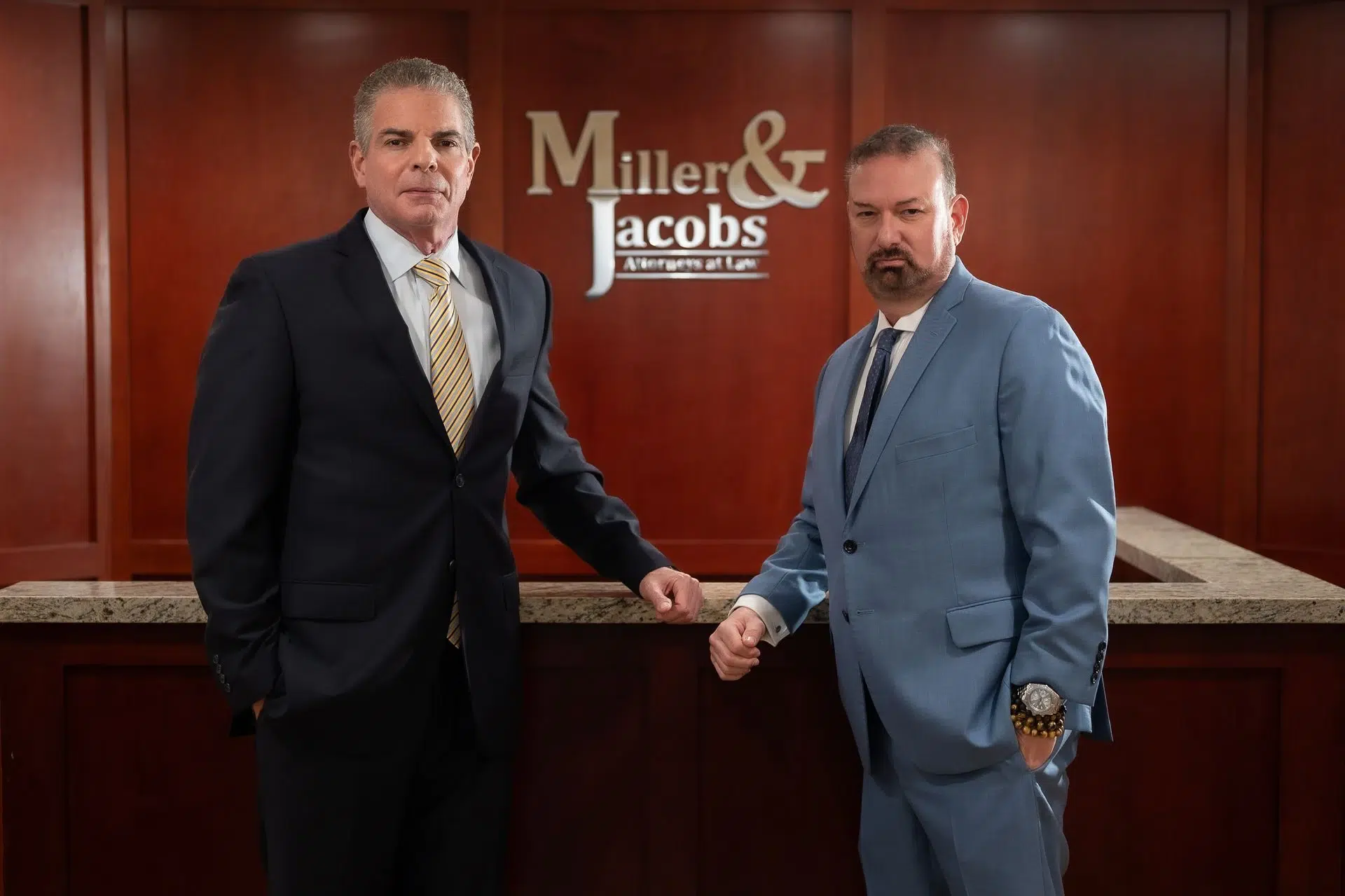
Miller & Jacobs is headquartered in Pompano Beach and represents injured people across Florida.
1600 S Federal Highway, Suite 1101
Pompano Beach, FL 33062
Experience You Can Verify
Product cases can involve corporate defendants, technical experts, disputed causation, multiple insurers, and evidence that must be translated into a clear sequence for a judge or jury.
$150M+
Reported Recoveries
50+
Years Combined Experience
230+
Combined Jury Trials

Partner
Former prosecutor and insurance defense attorney with more than 70 reported jury trials.
Read Mark J. Miller’s bio →
Partner
Former Miami-Dade Assistant State Attorney with more than 160 reported jury trials.
Read Rick S. Jacobs’s bio →Past results do not guarantee or predict a similar outcome. Every matter depends on its own facts, evidence, law, defendants, insurance, and losses.
Questions People Ask After a Product Injury
These answers provide general information. Product type, ownership, custody, injury mechanism, defendants, deadlines, and governing law can change the analysis.
Related Pompano Beach Resources