Pompano Beach drunk driving accident lawyers
A DUI arrest may explain why the crash happened, but it does not pay the medical bills, replace lost income, or show how your daily life changed.
Miller & Jacobs builds the civil case around you. We trace the crash, the available insurance, and every responsible party while you focus on treatment and what comes next.
The consultation is free. There is no attorney fee unless compensation is recovered for you.
Headquarters
1600 S Federal Highway, Suite 1101
Reported recoveries
Past results do not guarantee a similar outcome
Combined jury trials
Reported courtroom experience across the firm’s partners
Initial consultation
No attorney fee unless compensation is recovered for you
The first conversation
Pain, medication, shock, and unanswered questions can make the first days feel disjointed. Tell us what you remember. An uncertain detail is not a failure, and a useful claim does not begin by forcing the story into perfect order.
Bring whatever is already in front of you: a report number, photographs, discharge papers, a tow receipt, or an insurer’s message. If your crash happened in Hollywood, we can also help you understand a Hollywood drunk driving accident claim.
Protect your health
Follow the treatment plan, report new symptoms, and keep a simple record of how the injuries affect sleep, movement, work, and ordinary routines.
Keep the original record
Preserve photos, video, witness information, damaged property, receipts, insurer messages, and any documents law enforcement gave you.
Speak carefully
Report the crash, but do not fill memory gaps with assumptions or sign a broad release before you understand what it covers.
A clear path through two legal processes
The records may overlap, but the goals are different. Your civil claim needs its own strategy, evidence, and measure of the harm.
Your civil claim comes first here
Miller & Jacobs develops the civil claim to identify who may be financially responsible, determine which coverage may apply, and document how the crash changed your health, income, independence, and family life.
Who may answer
The driver, vehicle owner, employer, qualifying vendor, or another responsible party.
Which policies respond
Liability, UM or UIM, PIP, health benefits, commercial, or umbrella coverage.
What changed
Medical care, missed income, daily limitations, future needs, and family impact.
The State’s case
The charge, testing, plea discussions, and sentencing belong to the criminal process. You may be a witness or receive updates, but your losses are not the measure of that case.
What connects the two
Body-camera footage, testing records, witness accounts, crash evidence, and court filings may support the civil claim, but they still have to be connected to causation, coverage, and the full injury record.
You still have a path forward
Medical treatment, missed income, and unanswered questions do not pause while the criminal case moves forward. A Pompano Beach personal injury lawyer at Miller & Jacobs can build the civil claim around what the crash has cost you and pursue every available source of compensation.
The story does not start at impact
A DUI report may establish impairment, but the civil case still has to explain the movement, the people and businesses involved, the available policies, and the harm that followed.
Before the impact
Receipts, surveillance, phone records, witnesses, vehicle ownership, employment, and the driver’s prior conduct may affect the scope of the claim.
At the impact
Speed, braking, lane position, traffic controls, visibility, evasive action, point of impact, and each involved road user should form one coherent sequence.
After the impact
911 audio, body-camera footage, testing records, emergency care, symptoms, work restrictions, and insurer communications can answer different parts of the case.
A careful review can reveal another responsible party
Florida law sets a specific test for holding an alcohol vendor responsible. When the facts support it, Miller & Jacobs can investigate that additional path while continuing to build the claim against the impaired driver and every other responsible party.
Receipts, identification practices, surveillance, witness accounts, and service history can help determine whether the statute applies. Even if the vendor path is disputed, the underlying injury claim can still move forward against every fact-supported responsible party and available policy.
How Miller & Jacobs evaluates a vendor issue
The person’s age, the transaction, identification practices, witnesses, receipts, and surveillance may all matter.
This is a demanding, fact-specific exception. A single night of visible intoxication is not the statutory test.
A disputed vendor issue does not erase fact-supported claims against the impaired driver, vehicle owner, employer, or available policies.
The DUI charge does not identify every policy
The right coverage analysis depends on who owned the vehicle, why it was being used, the driver’s household and employment, and the language in every potentially applicable policy.
Depending on the policy and the injured person’s status, PIP may address part of covered medical expenses and lost income. Treatment timing, benefit limits, deductibles, and policy language must be checked.
The impaired driver’s bodily-injury coverage is a starting point. Limits, exclusions, reservations, and whether the policy was active must be confirmed.
Its terms may become important if the impaired driver’s policy provides no bodily-injury protection or falls short of the documented harm.
Ownership, permission, agency, business use, and other involved vehicles may lead to additional coverage and separate responsibility.
A statutory alcohol-service exception, negligent vehicle entrustment, a road defect, or another independent act may require a separate legal analysis.
The Pompano Beach road context
Reconstruction should fit the place: the traffic control, lighting, road geometry, nearby businesses, access points, and the way each person entered the scene.
Local familiarity helps the investigation ask the right questions without forcing every crash into the same template.
Beach and evening traffic
Visitors, pedestrians, bicycles, parking movements, glare, and changing evening visibility can affect what each driver should have seen.
Major intersections
Turning lanes, signal timing, through traffic, driveway access, and multiple points of conflict may shape the collision sequence.
Higher-speed movement
Ramp direction, lane changes, wrong-way movement, stopping distance, and electronic vehicle data may become central questions.
Arrival and departure
Tabs, receipts, cameras, valet records, rideshare data, witnesses, and parking-lot design can add context to what happened before impact.
The harm is more than a case number
A diagnosis is important, but it does not show the full effect on work, movement, sleep, relationships, independence, or the care you may need later.
Health and recovery
Emergency care, surgery, therapy, medication, rehabilitation, delayed symptoms, and future treatment your doctors reasonably expect.
Work and income
Used leave, lost wages, physical restrictions, reduced hours, job changes, benefits, and diminished earning ability when supported.
Daily function
Driving, stairs, errands, household tasks, recreation, transportation, family care, and the services or support you cannot manage alone.
Human impact
Physical pain, scarring, fear in traffic, emotional distress, loss of enjoyment, and effects on family or community roles.
Property and access
Repair or replacement, towing, storage, rental transportation, damaged personal property, and qualifying out-of-pocket expenses.
Fatal collision
Florida law may allow an estate and eligible survivors to pursue specific losses after a preventable death.
Start with what changed
Tell Miller & Jacobs what happened, what the doctors have said, and what has become harder since the crash. We can help organize the civil claim while you focus on the next part of your recovery.
What to bring
You do not need a complete file. A report number, discharge paper, insurer message, photograph, tow receipt, or the name of the investigating agency can be enough to begin the conversation.
Help from our Pompano Beach headquarters
Miller & Jacobs meets clients at its Pompano Beach headquarters on South Federal Highway. Our Pompano Beach personal injury lawyers can also speak with you by phone or video.
Pompano Beach office
1600 S Federal Highway, Suite 1101
Pompano Beach, FL 33062
954-465-8733
Experience you can verify
Mark Miller and Rick Jacobs bring backgrounds in prosecution, insurance defense, civil litigation, negotiation, and jury trials.
Reported recoveries
Combined jury trials
Both admitted to The Florida Bar

Partner
Former Assistant State Attorney, former insurance-defense lawyer, and more than 70 reported jury trials.
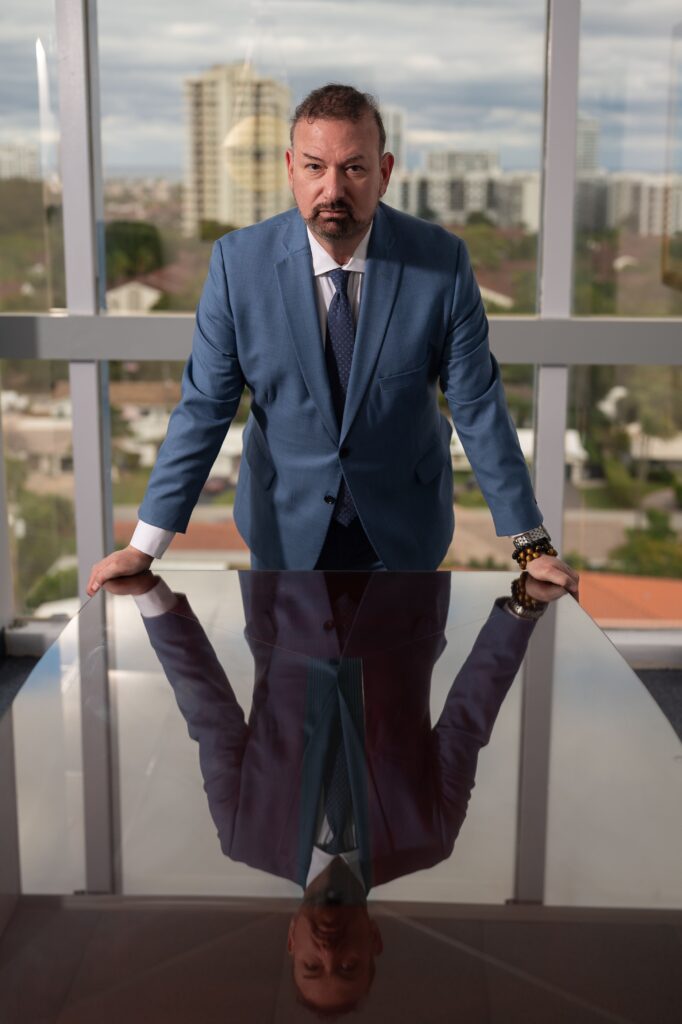
Partner
Former Miami-Dade Assistant State Attorney with more than 160 reported jury trials.
Past results do not guarantee a similar outcome. Every matter depends on its facts, evidence, injuries, available coverage, and applicable law.
Questions that follow an impaired-driving crash
The criminal record, policy language, injuries, involved parties, and stage of the proceedings can each change the civil analysis.
No. The criminal and civil cases use different procedures and standards. A civil claim can move while the DUI case is pending, although coordination may matter.
Potentially. Crash reports, body-camera footage, 911 audio, witness statements, testing records, and court filings may be obtainable through different channels.
Only in limited circumstances under Florida law. Section 768.125 focuses on unlawful service to a person under 21 or knowing service to a person habitually addicted to alcohol.
One place to look is the policy covering you or your household. Its UM or UIM terms may provide another route, but eligibility and limits have to be read in the actual contract. Ownership, employment, and business use should also be reviewed.
Possibly, but they are not automatic. Florida requires a specific factual and procedural basis before a punitive-damages claim may be asserted.
You may still have a claim. The facts surrounding your ride, the driver’s conduct, available coverage, and any comparative-fault argument require individual review.
For many Florida negligence claims, the limitations period is two years. Government notice rules and other exceptions can change the analysis, so the date should be checked early. Read Florida Statute § 95.11.
The consultation is free. There is no attorney fee unless compensation is recovered for you.
Related Pompano Beach resources