
Pompano Beach Unsafe Property Claims
A fall, assault, falling object, broken stair, unsafe pool, or another preventable property hazard can turn an ordinary stop into medical appointments, missed work, and questions no one at the property seems eager to answer.
Miller & Jacobs helps injured people identify who controlled the area, what records may exist, and whether the facts support a premises liability claim. Start with what you remember, even if the condition was cleaned, repaired, or changed afterward.
Free and confidential consultation. No attorney fee unless compensation is recovered for you.
The condition may be gone. The records may not be.
Surveillance, inspection logs, work orders, contracts, and witness accounts can help show what the scene no longer reveals.
The name on the deed may not identify every person or company responsible for the space.
The hazard and the proof of actual or constructive knowledge are separate questions.
Video, incident reports, inspection logs, and repair histories may not be kept indefinitely.
The file should connect the property condition to treatment, work, mobility, and daily life.
What to Know First
A premises liability claim usually turns on who possessed or controlled the area, what duty applied, whether the responsible party knew or should have known about the danger, and how the condition caused the injury.
Ownership alone does not settle responsibility. A tenant, property manager, association, maintenance company, security contractor, or another business may have controlled the place where the incident occurred or held the records needed to understand it.
Four Questions Shape the File
01
Control can be divided among several contracts and businesses.
02
Different conditions leave different records and require different proof.
03
A changed scene can still leave photographs, work orders, and witnesses behind.
04
The practical record may be spread across more than one organization.
Unsafe Property Is the Umbrella
Premises liability is broader than a fall. The legal work should fit the condition, the people or companies controlling the property, and the type of harm that followed.
Spills, tracked-in water, uneven flooring, broken pavement, missing warnings, and other walking-surface hazards.
Explore Slip and Fall Claims →Broken steps, missing handrails, code or maintenance issues, sudden movement, and failures affecting access between levels.
Dark approaches, broken gates, uncontrolled access, missing security measures, and other conditions connected to a violent incident.
Unsafe surfaces, missing barriers, equipment problems, inadequate supervision, and hazards near water or shared amenities.
Unstable displays, ceiling material, fixtures, shelving, glass, signage, and objects that fall or shift without warning.
Open work areas, tools, debris, temporary barriers, unfinished surfaces, and repairs that create a new danger for visitors.
The Scene Can Change Quickly
Cleaned. Repaired. Repainted. Re-lit. Reopened. The physical condition can change before the legal and medical picture is clear.
01
Pin down the entrance, aisle, stair, parking area, room, walkway, or common area as precisely as possible.
02
Photographs, video, witness names, an incident number, and early statements can prevent the location from becoming vague later.
03
Surveillance, inspection logs, cleaning schedules, repair requests, prior complaints, access records, and work orders may matter.
04
Emergency care, follow-up treatment, restrictions, symptoms, and changes noticed by family or coworkers help explain the harm.
05
The investigation can then connect control of the property to available insurance and the ways the injury affected life.
Proof Changes With the Hazard
A spill in a grocery aisle, a broken stair at an apartment building, and an assault in a dark parking area may all involve unsafe property. They do not create identical proof questions.
Business Floor Condition
For a transitory foreign substance in a business establishment, Florida law addresses whether the business had actual or constructive knowledge and should have acted. Circumstantial evidence may include how long the condition existed or whether it occurred regularly.
Read Fla. Stat. § 768.0755 →Structural or Maintenance Defect
Broken stairs, railings, pavement, lighting, doors, elevators, or building components may require maintenance histories, prior complaints, photographs, contracts, and information about who had authority to repair the area.
Security-Related Injury
Lighting, locks, gates, access, surveillance, staffing, prior incidents, and the conduct of everyone who contributed may become part of the analysis. These cases should not be reduced to a generic “crime happened here” claim.
Common Area or Public-Facing Space
Condominium corridors, apartment common areas, hotels, parking facilities, public property, and contractor-managed spaces may involve separate control documents and additional notice requirements.
Responsibility and Record Holders
A useful investigation follows control, contracts, daily operations, and records rather than assuming one property owner is the only possible party.
May retain responsibility for structural conditions, common areas, capital repairs, or duties kept under a lease.
May control daily inspections, cleaning, displays, staffing, warnings, and the condition of the area used by customers.
May hold complaint logs, maintenance requests, vendor contracts, access records, budgets, and decision-making authority.
May have schedules, checklists, employee records, service tickets, photographs, and responsibility for the work performed.
May control guards, patrols, cameras, access systems, incident reports, staffing plans, and responses to earlier concerns.
May be connected to defective work, open work areas, temporary conditions, failed repairs, or a component that was improperly installed.
Start With What You Have
Most injured people leave the property with little more than a location, a report number, a few photographs, or the name of someone who saw what happened. The rest of the file may need to be identified and gathered.
Bring what is available. A first conversation can focus on what happened, how you were hurt, which records may exist, and what should be checked next.
01
Exact location and approximate time
The aisle, stair, lot, room, entrance, walkway, or common area.
02
Incident report or report number
A copy is helpful, but the number, date, or employee name can be a starting point.
03
Photographs or video
The condition, surrounding area, warning signs, lighting, damage, clothing, or injuries.
04
Witness names or contact details
People who saw the condition, the incident, or what happened immediately afterward.
05
Shoes, clothing, or damaged items
Keep them in their existing condition rather than cleaning, repairing, or discarding them.
06
Medical and pharmacy information
Provider names, discharge papers, referrals, medication, restrictions, and follow-up plans.
07
Work and household changes
Missed shifts, modified duties, transportation needs, help at home, or activities no longer possible.
08
Messages and insurance contacts
Emails, texts, voicemails, letters, claim numbers, and requests to give a statement or sign a release.
Pompano Beach Property Context
The useful records may sit with a store, hotel, condominium association, landlord, property manager, vendor, security contractor, or insurer rather than in one obvious place.
Commercial Properties
Daily inspection practices, cleaning schedules, merchandising, staffing, surveillance, and recurring-condition records may be important.
Residential and Hospitality
Associations, landlords, managers, maintenance vendors, and tenants may divide control of corridors, stairs, pools, elevators, and parking areas.
Exterior and Access Areas
Lighting, pavement, drainage, striping, access systems, patrols, landscaping, and repair records may be held by different companies.
Waterfront and Recreation
Barriers, surface conditions, maintenance, equipment, signage, staffing, and use rules can shape which questions need answers.
Start with the place, the condition, the people who were there, and what changed after the incident.
Compensation and the Life Afterward
The categories available depend on the facts, proof, insurance, and law. A careful evaluation connects each claimed loss to records and to the way the injury affected the person’s life.
Medical
Emergency care, hospitalization, therapy, medication, follow-up treatment, and reasonably supported future medical needs.
Income
Wages already missed, modified work, lost opportunities, and future earning capacity affected by lasting restrictions.
Human Harm
The documented physical and emotional effects of the injury and the activities, relationships, and routines it disrupted.
Daily Life
Transportation, assistance, accessibility needs, household services, equipment, and other changes required by the injury.
Other Costs
Damaged belongings, travel, replacement services, and other qualifying expenses connected to the incident and treatment.
Fatal Injury
Damages Florida law may allow an estate and eligible survivors after a preventable death on unsafe property.
Deadlines and Fault
Premises liability cases can involve short-lived evidence, several responsible parties, and different legal rules. The correct deadline and fault analysis depend on the incident date, defendant, property type, and claim.
Florida law generally provides a two-year limitations period for an action founded on negligence. Other claims and notice rules may be different. Read Fla. Stat. § 95.11 →
A transitory-substance claim may turn on actual or constructive knowledge, including how long the condition existed or whether it occurred regularly.
Florida’s comparative-fault law may reduce recovery and can bar damages when a claimant is found greater than 50 percent at fault in an action covered by the statute.
For certain claims involving a third party’s criminal act, the factfinder must consider the fault of everyone who contributed to the injury.
Claims involving a public entity may require additional notices, procedures, and shorter action steps. The defendant should be identified promptly.
Start With the Property and What Changed
Tell us where it happened, what you remember about the condition, what the property did afterward, and how the injury has affected treatment, work, and daily life.
Help Close to Home
You can begin by phone, online, or through our Pompano Beach office. The first conversation is about the property, the injury, the records that may exist, and the next useful step.
1600 S. Federal Highway, Suite 1101
Pompano Beach, FL 33062
Experience You Can Verify
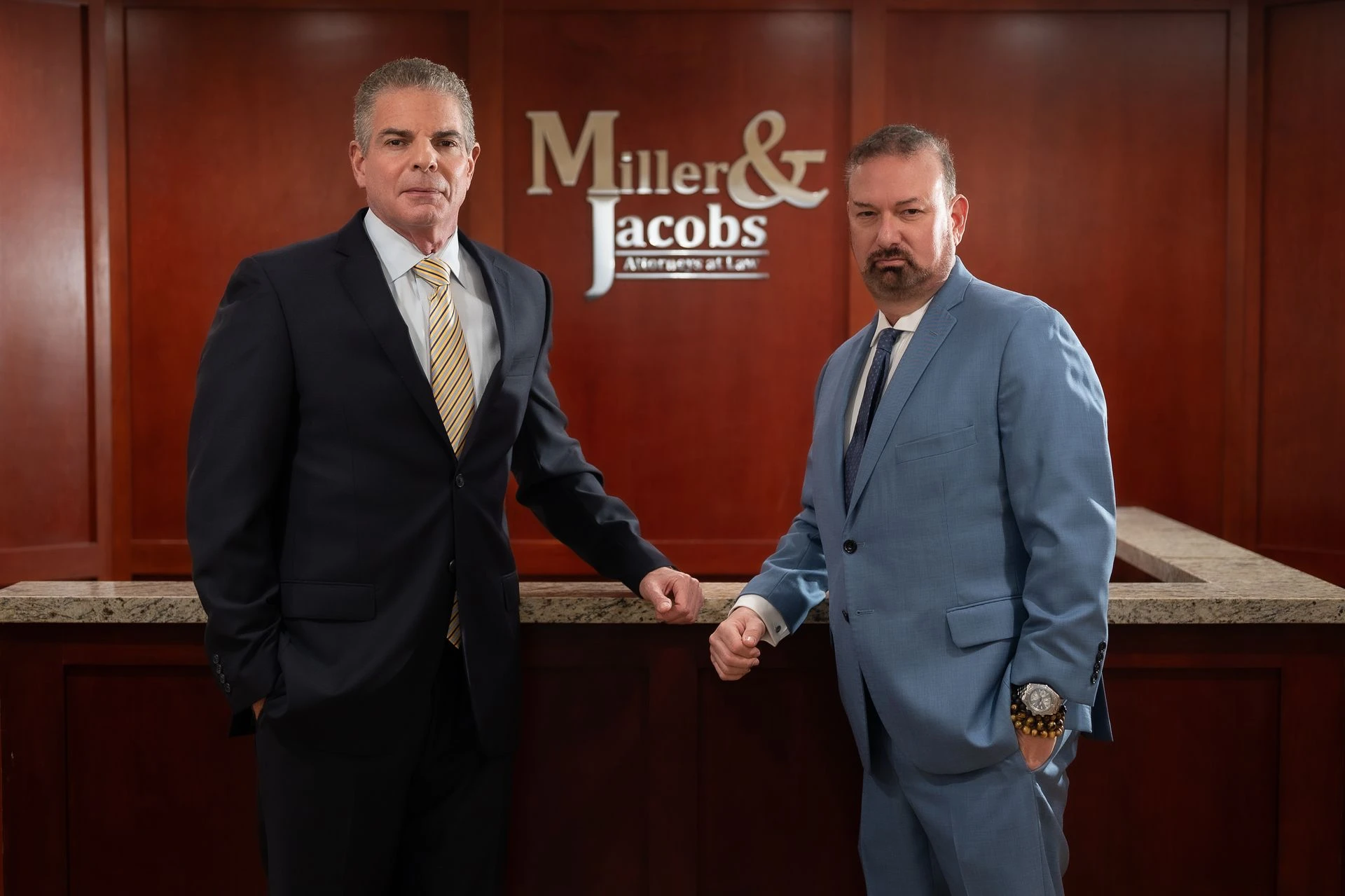
Mark Miller and Rick Jacobs bring former prosecutor experience, insurance-defense insight, and extensive reported jury-trial experience to the preparation of injury claims.
Reported Recoveries
Combined Jury Trials
Florida Bar Membership

Partner
Former Assistant State Attorney and former insurance-defense lawyer with more than 70 reported jury trials.
Read Mark J. Miller’s bio →
Partner
Former Miami-Dade Assistant State Attorney with more than 160 reported jury trials.
Read Rick S. Jacobs’s bio →Past results do not guarantee or predict a similar outcome. Every matter depends on its own facts, evidence, law, insurance, and losses.
Questions People Ask After an Unsafe Property Injury
You do not need a complete legal theory before asking for an evaluation. These answers explain general issues that often arise in Pompano Beach premises liability matters.
An incident report can help identify the event, but the absence of one does not answer whether a claim exists. Photographs, medical records, witnesses, receipts, location data, messages, and surveillance may help establish when and where the injury occurred.
A changed scene does not automatically eliminate the matter. Photographs, video, work orders, cleaning logs, prior complaints, invoices, employee accounts, and other records may still show what existed and who responded.
Possibly. Responsibility may follow possession, control, contracts, daily operations, inspection duties, repair authority, or security obligations. More than one person or company may require investigation.
Awareness may become part of the fault analysis, but it does not automatically decide every case. The nature of the danger, available alternatives, warnings, lighting, distractions, and the conduct of all involved may matter.
A security-related claim may examine access, lighting, locks, gates, surveillance, staffing, prior incidents, and the conduct of everyone who contributed. The claim is fact-specific and legally distinct from an ordinary floor-condition case.
No. Premises liability can involve walking surfaces, stairs, elevators, falling objects, pools, lighting, access, security, maintenance work, building components, and other unsafe property conditions.
Many Florida negligence actions generally have a two-year limitations period, but other deadlines and notice rules may apply. The incident date, defendant, and claim type should be checked promptly.
The consultation is free. There is no attorney fee unless compensation is recovered for you, subject to the written representation agreement.
Related Pompano Beach Resources