
If you were injured on the water, a Broward County boating accident lawyer can help you understand which legal framework governs your claim. Many boating accident cases in Broward County fall under either Florida law or federal maritime law, and which one applies depends on where the crash happened. That difference affects how long you have to file, what damages may be available, and how the case is handled.
Miller & Jacobs represents people injured on the Intracoastal Waterway, the New River, the waters off Port Everglades, and the open Atlantic. We handle the full claim, from gathering FWC incident reports and vessel inspection records to taking liability cases to trial in Broward County courts.
Call for a free case review. No obligation, no upfront cost.
Table of contents
- Why Broward Waterways Produce Serious Accidents
- What Causes Most Broward Boating Accident Claims
- State Law or Admiralty Law: This Distinction Matters for Your Claim
- What Insurance Companies Do After Boating Accidents
- Damages Available in a Broward Boating Accident Case
- What to Do After a Boating Accident in Broward County
- Questions Broward Boating Accident Clients Ask
- Why Miller & Jacobs for Your Broward Boating Accident Case
Why Broward Waterways Produce Serious Accidents
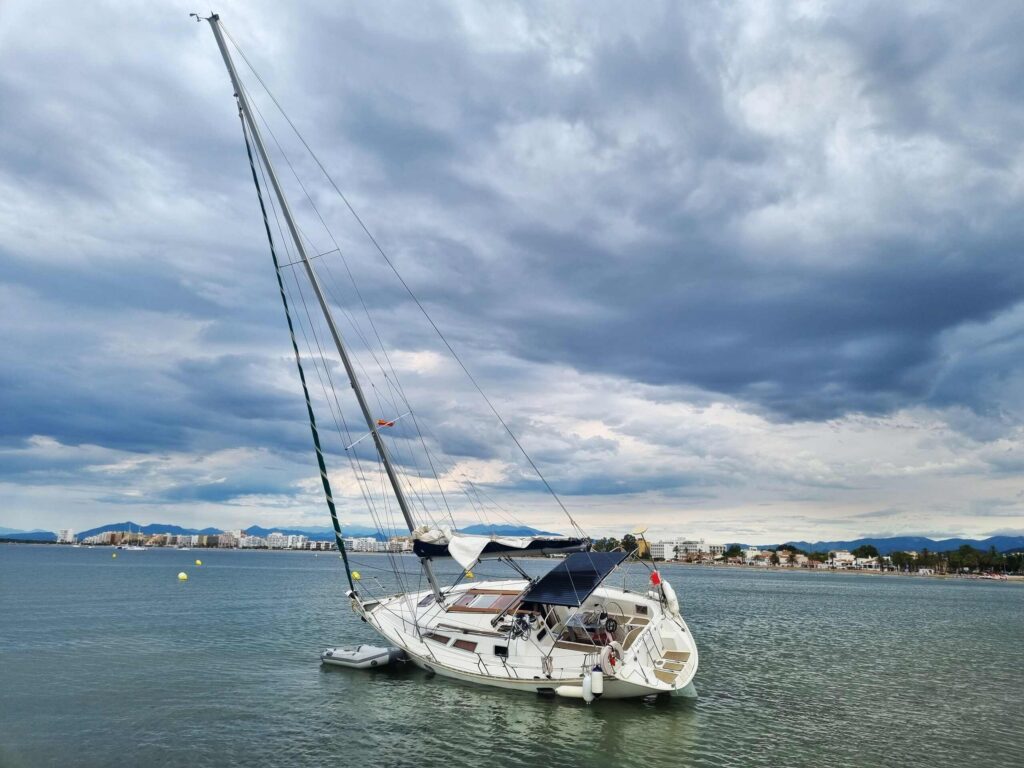
Broward County waterways are among the most congested in Florida. The Intracoastal Waterway through Fort Lauderdale runs alongside commercial marinas, restaurants, residential docks, and tourist boat traffic, all in the same narrow channel. That density is what makes accidents so common here, and why the injuries tend to be serious.
Boating traffic also increases during seasonal tourism, especially in spring and winter months when visitors rent vessels for the first time. Many operators are unfamiliar with local navigation rules, which increases the risk of sudden turns, wake violations, and collisions in already congested sections of the Intracoastal Waterway.
The waterway itself creates physical hazards that other counties don’t face. The stretch between Oakland Park Boulevard and Sunrise Boulevard generates what the FWC calls a “washing machine effect,” where wakes from multiple vessels bounce off concrete seawalls and collide in the middle of the channel. That turbulence capsizes small boats and throws passengers overboard.
Passengers thrown into docks, seawalls, or other vessels can suffer serious head trauma, including concussions and traumatic brain injuries that require long-term medical care.
In response, the FWC designated this stretch a Slow Speed, Minimum Wake zone, though compliance is inconsistent.
Port Everglades adds another layer of complexity. Cargo ships, cruise liners, and recreational vessels share the same inlet. Speed differentials between vessel types create blind spots that smaller boat operators may not anticipate until it is too late.
Florida consistently records hundreds of reportable boating accidents and dozens of fatalities each year. A collision with a fixed object is among the most common accident types statewide. Operator inattention and excessive speed are recurring factors in Broward’s own accident reports.
Many Broward boating accidents also involve borrowed or shared vessels, which can create disputes over whether the boat owner, the operator, or both are legally responsible for the crash.
What Causes Most Broward Boating Accident Claims

Most boating accident cases come down to operator conduct. Negligence can take several forms, and identifying the right theory early shapes the entire claim.
Operator inattention and distraction. Operators who are watching other boats, talking to passengers, or using electronics instead of monitoring the water are responsible for some of the most serious collisions on Broward waterways.
This is especially common in crowded Fort Lauderdale waters where operators must constantly adjust to wake conditions, channel narrowing, and fast-moving charter traffic.
Boating under the influence. Florida Statute § 327.35 prohibits operating a vessel while impaired by alcohol or controlled substances, enforcing a legal limit of 0.08 BAC that mirrors Florida’s DUI statute. While law enforcement conducts regular patrols on the Intracoastal Waterway, BUI cases often face unique evidentiary challenges; environmental factors such as sun exposure, dehydration, and wave motion can mimic signs of impairment, making liability harder to definitively establish than in standard roadside investigations.
Excessive speed in restricted zones. No-wake and slow-speed zones exist throughout Broward waterways. Operators who ignore posted speed restrictions and injure others face both civil liability and potential criminal exposure.
Negligent boat rental operations. Charter companies and rental operators in Fort Lauderdale have a duty to screen operators, provide basic safety instruction, and maintain their vessels. When they fail on any of those points, their negligence can be the basis for a direct claim against the company.
Unsafe vessel condition. Equipment failures, defective life jackets, faulty steering, and engine problems that a reasonable owner should have caught can form the basis of a negligence or products liability claim, depending on the facts.
Speak with a Broward County boating accident attorney about your specific situation. Call Miller & Jacobs today for a free consultation.
State Law or Admiralty Law: This Distinction Matters for Your Claim
The legal framework that governs your claim is determined by where the accident happened. It affects your filing deadline, available damages, and how comparative fault is calculated.
Florida state law applies to accidents that occur on waters contained entirely within Florida’s boundaries, such as inland lakes and rivers. Under Florida Statute § 95.11, the personal injury statute of limitations following the 2023 amendment under HB 837 is two years from the date of the accident for incidents where Florida law controls.
Under general maritime law, most personal injury claims carry a three-year statute of limitations. However, certain claims and contracts may shorten that deadline to one year or less. However, certain defendants, including cruise lines and charter companies with ticket contracts, can contractually shorten that window to as little as one year, and in some cases, six months.
Wrongful death claims carry a two-year limitation under Florida law and can be shorter under some maritime arrangements.
These deadlines are not interchangeable, and the analysis is not always straightforward. Get clarity on which clock is running in your case before time runs out.
What Insurance Companies Do After Boating Accidents
Insurance adjusters will contact you quickly after a boating accident, often before you fully understand how serious your injuries are, and their goal is to limit what the policy pays out. Boat owners and marina operators typically carry watercraft liability or commercial marine policies administered by adjusters trained to reduce claims. How they approach your case depends on the facts, but the tactics are predictable.
Adjusters contact injured parties quickly, often before the full extent of injuries is known. Early recorded statements are used to build defenses. Offers made in the first few weeks rarely reflect the actual cost of serious injuries, lost income, and long-term care.
Important evidence can also disappear quickly after a boating accident. Marina surveillance footage, vessel GPS data, maintenance records, and witness statements may only be available for a short time unless they are preserved early.
Comparative fault is another common pressure point. Florida follows a modified comparative negligence system under Florida Statute § 768.81. If a person is found more than 50 percent responsible for an accident, they cannot recover damages. If an adjuster can argue that you contributed to the accident, even partially, it reduces the amount the insurer pays. Attributing fault to the injured party, even without strong evidence, is a standard negotiating position.
A Broward County boating accident lawyer at Miller & Jacobs handles all communication with insurers on your behalf. We gather evidence before any statements are made and build the liability picture before any number is discussed.
Damages Available in a Broward Boating Accident Case
A successful claim can recover economic and non-economic damages. The categories that typically apply in boating injury cases include:
Compensation in a boating accident case may include:
- Medical expenses, including emergency care, surgery, rehabilitation, and future treatment.
- Lost income and reduced earning ability if injuries affect your ability to work.
- Pain and suffering tied to serious or long-term injuries.
- Emotional distress and loss of enjoyment of life after a traumatic accident.
In cases involving willful misconduct, gross negligence, or BUI, punitive damages may be available under Florida law.
Wrongful death claims allow surviving family members to recover for financial support lost, loss of companionship, and funeral and burial costs under Florida’s Wrongful Death Act.
Find out what your case may be worth. Call Miller & Jacobs for a free, no-obligation case review.
What to Do After a Boating Accident in Broward County
The steps you take in the first hours and days after an accident have a direct impact on your claim. These are the most important ones.
- Report the accident. Florida Statute § 327.30 requires the operator to report an accident involving injury, death, or property damage exceeding $2,000 to the FWC. The FWC investigates and creates an incident report that becomes a key piece of evidence. If law enforcement responded on scene, that report matters as well.
- Get medical care immediately. Even if you feel functional, injuries from capsizing, impact, or near-drowning are not always obvious at the scene. Insurers use the gap between the accident and treatment to argue that injuries were not caused by the incident. Get evaluated the same day.
- Document everything you can. Photos of the vessels, the location, visible injuries, and any damage. Contact information for witnesses. Names of any FWC or marine patrol officers on scene. Notes about what happened while it is still clear. Small details often become important later, including weather conditions, lighting at the time of the crash, and the position of nearby vessels. These facts can help reconstruct how the accident occurred.
- Insurance adjusters often ask for recorded statements shortly after the accident. You are not required to provide one before speaking with a lawyer. Early statements are frequently used later to challenge injury claims or shift blame.
Contact Miller & Jacobs before accepting anything. Once you accept a settlement, the claim is typically closed. Our Broward County boating accident lawyers review your situation at no charge and advise you on whether an offer reflects the actual value of your claim.
Discover how waterway jurisdiction and negligence apply to other locations in the Fort Lauderdale area, like Pompano Beach, by reading our full guide.
Questions Broward Boating Accident Clients Ask
Can I still file a claim if the boating accident happened at night?
Yes. Nighttime boating accidents are common around Fort Lauderdale and the Intracoastal. Reduced visibility, alcohol use, missing navigation lights, and wake conditions often become major liability issues. A nighttime accident does not prevent recovery, but evidence such as GPS data, marina footage, and witness statements becomes especially important.
What if the boat operator left the scene after the crash?
Leaving the scene of a boating accident involving injury is a criminal offense under Florida law. Even if the operator cannot immediately be identified, FWC investigators can often trace vessel registration records, marina surveillance footage, witness accounts, and electronic navigation data to identify the responsible party.
The other boater didn’t have insurance. Can I still recover?
Possibly. Florida does not require recreational boat owners to carry liability insurance. If the at-fault operator is uninsured, your options depend on whether your own watercraft policy includes uninsured boater coverage, whether the accident happened on a rental vessel, or whether a third party, such as a marina or charter company, shares liability. An attorney can identify all available coverage before concluding that recovery is impossible.
What if I was a passenger, not the operator?
Passengers have strong legal standing. You were not in control of the vessel, so comparative fault arguments against you carry much less weight. Your claim is against the operator and potentially the vessel owner, which is a straightforward liability path in most cases.
How long do I have to file a boating accident claim in Broward County?
It depends on where the accident happened and who is being sued. Under Florida law, the personal injury statute of limitations is two years from the date of the accident. Under general maritime law, most claims allow three years, but certain defendants, such as charter companies, can contractually shorten that window to one year or less. Do not assume you have time to wait. An attorney can identify which deadline applies to your specific case.
Why Miller & Jacobs for Your Broward Boating Accident Case

Boating accident cases are not the same as car accident cases. The legal framework is different, the evidence gathering process is different, and the defendants, boat owners, charter operators, marine insurers, and in some cases the federal government, are different. General personal injury experience does not automatically translate to maritime and waterway claims.
Miller & Jacobs has handled boating accident cases across Broward County’s waterways, including multi-party liability disputes on the Intracoastal, BUI injury cases, and wrongful death claims filed in Broward Circuit Court under both Florida law and admiralty jurisdiction. We work directly with marine surveyors, accident reconstruction specialists, and medical providers who understand on-water injuries. Our attorneys have recovered compensation for passengers, operators, and families in cases that other firms declined as too complex. Our fee is contingency-based. You pay nothing unless we recover for you.
Call Miller & Jacobs now to speak with a Broward County boating accident lawyer. Your consultation is free, and you pay nothing unless we win your case.