
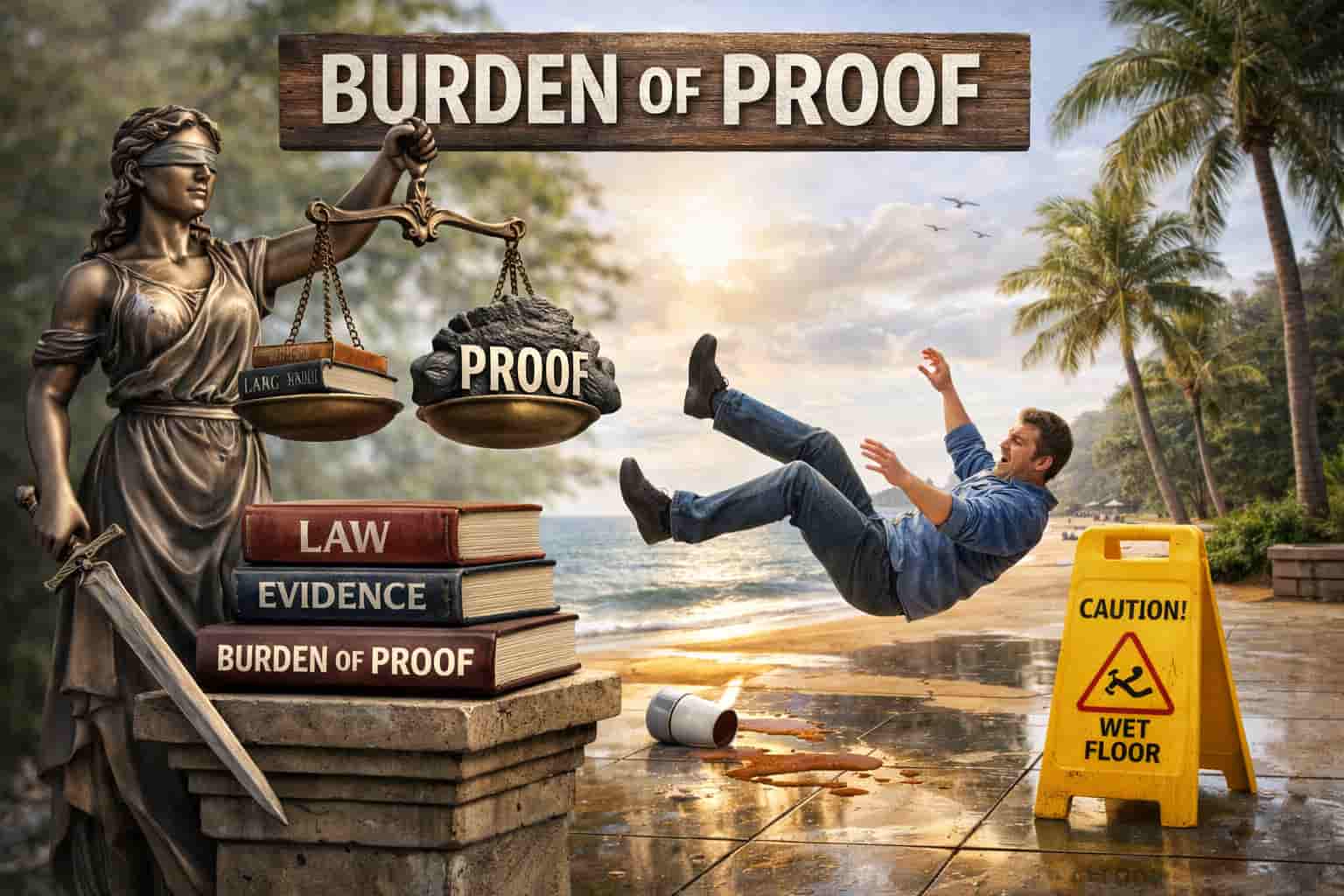
Slip and fall cases in Florida often turn on proof. Florida Statute § 768.0755 places the burden on the injured person to show that a business knew, or should have known, about a dangerous condition and failed to address it. Without that showing, a claim may be dismissed before it ever reaches a jury.
Because businesses rarely admit prior knowledge of a spill, most cases hinge on constructive notice. Courts look at physical evidence at the scene, including the condition of the substance, signs of foot traffic or disturbance, and available surveillance footage or business records. Those details often determine whether the evidence is sufficient to meet the statutory burden.
If you were injured in a slip and fall at a grocery store, restaurant, or retail property anywhere in Florida, contact Pompano Beach slip and fall accident lawyer at Miller & Jacobs to discuss whether the evidence in your case meets the requirements set by Florida law. The firm offers free, confidential consultations and represents injury victims statewide.
Key Takeaways About Constructive Notice in Slip and Fall Cases in Florida
- Florida Statute § 768.0755 places the burden of proof on the injured person to show the business knew or had reason to know about the hazardous condition before the fall occurred.
- Constructive notice may be proven through circumstantial evidence, including physical signs that the substance sat on the floor long enough for a reasonably careful business to have discovered it.
- Florida appellate courts recognize a plus factor test, where the injured person's testimony about the substance on the floor combined with additional physical details may prevent the case from being dismissed on summary judgment.
- The physical condition of the substance matters more than the clock. Dirt, scuff marks, footprints, cart tracks, drying, discoloration, and temperature changes all serve as circumstantial evidence of how long a hazard existed.
- Florida's two-year statute of limitations under Florida Statute § 95.11, as amended by House Bill 837 in 2023, gives injury victims less time than ever to act on a claim.
What Does Florida Statute § 768.0755 Require You to Prove?
Florida Statute § 768.0755 governs premises liability claims involving transitory foreign substances in a business. A transitory foreign substance is anything temporary and unnatural on a floor surface that creates a slip hazard, such as a spilled liquid, a dropped piece of fruit, leaked water from a cooler, or melting ice.
Two Paths to Proving the Business Had Knowledge
The statute gives injured persons two ways to prove the business knew about the hazard. The first path involves actual knowledge, meaning someone at the business directly knew about the spill. The second path involves constructive knowledge, which means the hazard existed long enough or occurred regularly enough that the business had reason to know about it through the exercise of ordinary care.
Actual knowledge is hard to prove because businesses rarely admit they knew about a specific spill before someone fell. A store manager who saw a puddle and walked past it without cleaning it up or placing a Wet Floor sign creates actual knowledge, but that type of direct evidence is uncommon.
Constructive notice in a slip and fall in Florida is the more common avenue, and it depends almost entirely on circumstantial evidence.
Why Most Claims Hinge on Constructive Notice Rather Than Actual Knowledge
A person who slips and falls on a puddle at a Broward County supermarket or a restaurant near Las Olas Boulevard typically has no way to prove when the substance first hit the floor. The person who caused the spill is usually long gone.
That leaves circumstantial evidence as the only tool for meeting the 768.0755 evidentiary requirements. Florida courts have developed a framework for evaluating that evidence, known informally as the plus factor test.
What Is the Plus Factor Test for Constructive Notice in Slip and Fall Cases?
Florida appellate courts have held that the mere presence of a substance on the floor, standing alone, does not establish constructive notice. The injured person needs something more. That something more is what courts call a plus factor, meaning physical details about the substance or its surroundings that suggest it sat on the floor long enough for the business to have noticed it.
Physical Evidence That Florida Courts Have Recognized in Slip and Fall Injury Lawsuits
Florida courts have identified specific physical characteristics that can establish how long a substance existed on a floor. In Welch v. CHLN, Inc., 357 So. 3d 1277 (Fla. 5th DCA 2023), the court outlined circumstantial evidence relevant to constructive notice, a framework later echoed by the Eleventh Circuit in Sutton v. Wal-Mart Stores, E., LP, 64 F.4th 1166 (11th Cir. 2023).
Florida slip-and-fall cases have found constructive notice supported by evidence such as:
- Dirt, grime, or discoloration in the substance
- Footprints or shoe marks through or around the spill
- Shopping cart tracks running through the liquid
- Drying, crusting, or uneven consistency (e.g., dried edges with a wet center)
- Temperature changes, such as thawed frozen items or melted ice
These conditions suggest the hazard existed long enough to be discovered. By contrast, a clean, undisturbed spill typically indicates a recent occurrence. Courts often rely on the physical condition of the substance to infer timing, sometimes more heavily than witness testimony.
When Plus Factors Fall Short of Proving Constructive Notice in Florida SLip and Fall Cases
Plus factors do not overcome direct evidence showing the substance appeared only moments before the fall. In Publix Super Markets, Inc. v. Safonte, 2024 WL 3057561 (Fla. 4th DCA 2024), the plaintiff slipped on yogurt approximately two minutes after it fell from another shopper’s cart.
Despite visible yogurt on the floor, the court held the brief timeframe was insufficient to establish constructive notice. Where evidence shows a very short timeline, plus factors alone may be inadequate.
How Do You Prove a Puddle Existed Long Enough to Establish Constructive Notice in Florida
Proving a puddle existed for a long time requires translating physical observations into legal arguments that a jury might accept. The goal is to show that the substance's appearance or condition is inconsistent with a fresh, recent spill.
Reading the Physical Clues at the Scene
The condition of a substance can distinguish an aged hazard from a fresh spill. In Valdes v. Verona at Deering Bay, 2024 WL 3049788 (Fla. 3d DCA 2024), the plaintiff testified that the puddle was green, dirty, large, and partially dried, with smudge marks and footprints nearby. The Third District Court of Appeal held those observations were sufficient to satisfy the plus factor test and reversed summary judgment.
Florida courts have long recognized that similar descriptions—such as substances that appear dirty, dried, wilted, rotten, sticky, or otherwise aged—may provide enough circumstantial evidence for a jury to conclude the hazard existed long enough to establish constructive notice. What the substance looks like at the time of the fall often matters more than pinpointing the exact moment it reached the floor.
Why Photographs Matter More Than Anything Else in Slip and Fall Injury Claim
The single most valuable piece of evidence in a constructive notice case is a photograph taken at the scene before the business cleans up the hazard. A photo captures the color, size, texture, and surroundings of the substance in a way that testimony alone may not.
Photographs also show whether a Wet Floor sign or other warning existed near the hazard at the time of the fall. Without photos, you rely entirely on memory, and defense attorneys aggressively challenge that memory during depositions and cross-examination.
Does the Regularity Prong Offer Another Way to Prove Constructive Notice in a Slip and Fall?
Florida Statute § 768.0755 provides a second, often overlooked way to prove constructive knowledge. Under subsection (1)(b), the injured person may show that the dangerous condition occurred with regularity and was therefore foreseeable. This path does not require proving how long the specific substance sat on the floor before the fall.
Situations Where Recurring Hazards Support Constructive Notice in a Slip and Fall Case
Some hazards recur because of the nature of the business or the property's physical features. The regularity prong may apply when the same type of condition has appeared in the same location multiple times, such as:
- A grocery store freezer that regularly leaks condensation onto the floor in the same aisle
- A restaurant entrance that collects rainwater during South Florida storms without mats or drainage
- A parking lot at a Broward County shopping plaza with recurring oil stains from delivery vehicles
- A hotel pool area where water consistently pools on walkways without non-slip treatment
If the business knew the condition happened repeatedly and still failed to implement a reasonable fix, the regularity of the hazard itself may establish the premises liability burden of proof. Prior incident reports, maintenance logs, and employee testimony about similar spills or leaks may all support this argument.
What Role Do Surveillance Cameras and Business Records Play in Proving Constructive Notice?
Beyond the physical appearance of the substance, business records and surveillance footage provide powerful circumstantial evidence of constructive notice in a slip and fall in Florida. Many Florida businesses, particularly large retailers and grocery chains, operate security camera systems that record activity on the sales floor throughout the day.
How Surveillance Footage Strengthens or Weakens a Premises Liability Claim in Florida
Security camera footage may show how long the substance sat on the floor before the fall. It may also reveal employees walking past the hazard without stopping to clean it or place a warning sign.
In Thompson v. Wal-Mart Stores East, LP, a federal court in Miami denied Wal-Mart's motion for summary judgment after footage showed dozens of customers and employees passing through the area where the plaintiff fell.
What Inspection Logs and Maintenance Records Reveal about Your Slip and Fall Accident
Maintenance logs and inspection records also factor into the analysis. Florida courts look at whether the business had a reasonable inspection policy and whether employees actually followed it.
Businesses that claim to inspect aisles on regular intervals carry the burden of proving those inspections took place. If a store's log shows no inspection for two hours before the fall, that gap supports an argument that the business failed to exercise ordinary care.
The following types of business records may strengthen a constructive notice claim under Florida Statute § 768.0755:
- Security camera footage showing the duration the substance remained on the floor and any employees who walked past without acting
- Inspection logs indicating the last time an employee checked the area where the fall occurred
- Prior incident reports documenting previous falls or spills in the same location
- Work orders or maintenance requests related to known hazards like leaking equipment damaged flooring
The records a business keeps, or fails to keep, often reveal as much as the puddle itself. A well-documented inspection history helps the business defend itself, while gaps in that documentation may help the injured person prove the business fell short of ordinary care.
FAQs for Constructive Notice Slip and Fall Florida
What is constructive notice in a Florida slip and fall case?
Constructive notice means the business did not have direct knowledge of the hazard, but the condition existed long enough or occurred often enough that a reasonably careful business should have discovered and corrected it. Florida Statute § 768.0755 allows constructive knowledge to be proven through circumstantial evidence.
What physical evidence helps prove constructive notice?
Courts look for signs that a substance was not freshly spilled, such as dirt or grime mixed into the liquid, footprints or cart tracks, drying or changes in consistency, and temperature changes like melted ice or thawed food. These plus factors suggest the hazard existed for a sufficient period of time.
How long must a spill exist to establish constructive notice?
Florida law sets no specific time requirement. A spill may be too recent to support notice, while physical evidence showing age or disturbance may allow a case to proceed. The focus is on the condition of the substance, not the clock.
Does the business have to admit it knew about the spill?
No. Actual knowledge is one path, but most Florida slip and fall cases rely on constructive notice proven through circumstantial evidence rather than a direct admission.
What if the spill was cleaned up before photos were taken?
The loss of physical evidence makes proof more difficult but does not bar the claim. Testimony, witness statements, and any available surveillance footage may still support constructive notice, especially if footage is requested promptly.
Protect Your Constructive Notice Slip and Fall Claim in Florida Before Evidence Disappears

Florida Statute § 768.0755 requires an injured person to prove a business knew or should have known about a dangerous condition. In most slip and fall cases, that proof depends on constructive notice and evidence that disappears quickly.
Spills are cleaned, surveillance footage is recorded over, and inspection records may be unavailable. Florida’s two-year statute of limitations further limits how long a claim can be brought.
If you were hurt in a slip-and-fall accident at a Florida grocery store, restaurant, or retail property, Miller & Jacobs Accident Attorneys can evaluate the evidence in your case. For a fall in Orlando, our guide to getting help after an Orlando slip and fall explains missing reports, treatment bills and the next steps.
We represent clients statewide in transitory foreign substance claims and operate on a contingency-fee basis—meaning you owe no legal fees unless we recover compensation for you. Contact us today for a free, confidential consultation.