A spinal cord injury can permanently affect how you move, work, and live. Many victims face long-term medical treatment, rehabilitation, reduced mobility, and significant financial strain. When another party’s negligence caused the injury, Florida law may allow you to pursue compensation for the losses that follow.
If you or a loved one suffered a spinal cord injury in Fort Lauderdale, do not wait to get legal guidance. Contact Miller & Jacobs today for a free consultation to discuss your case and learn how the firm can help you pursue the compensation you may be entitled to. You pay no attorney fees unless compensation is recovered.
Table of contents
- How Miller & Jacobs Fights for Spinal Cord Injury Victims in Fort Lauderdale
- What Causes Spinal Cord Injuries in Fort Lauderdale Personal Injury Cases?
- What Types of Spinal Cord Injuries Appear in Personal Injury Claims?
- What Compensation May Spinal Cord Injury Victims in Fort Lauderdale Pursue?
- Does Florida's Comparative Fault Law Affect Your Spinal Cord Injury Claim?
- FAQs for Fort Lauderdale Spinal Cord Injury Lawyers
- Contact Fort Lauderdale Spinal Cord Injury Lawyers at Miller & Jacobs Today
How Miller & Jacobs Fights for Spinal Cord Injury Victims in Fort Lauderdale
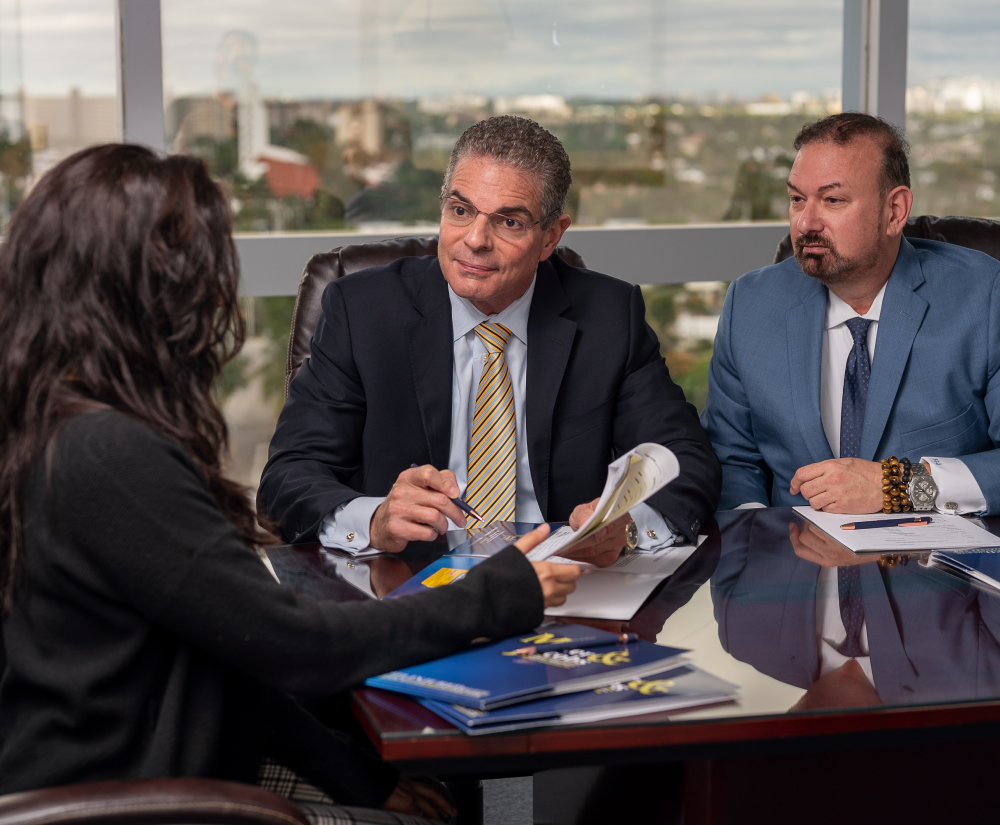
Spinal cord injury cases are not ordinary personal injury claims. They demand an understanding of long-term medical needs, future lost income, and life-altering consequences that a standard insurance settlement almost never fully accounts for. Miller & Jacobs has spent decades handling serious injury cases throughout Fort Lauderdale, Pompano Beach, and the broader Broward County area.
Founding attorneys Mark J. Miller and Rick S. Jacobs each spent years as prosecutors and as insurance defense lawyers before building this personal injury firm. That background gives them a direct view into how insurance carriers evaluate claims and where those positions may be challenged.
How a Fort Lauderdale Spinal Cord Injury Lawyer Builds Your Case
Miller & Jacobs invests its own resources into building each claim. The firm works with medical consultants, life care planners, and financial experts to calculate not just what your injury has cost you today, but what it may cost you over the course of your life. Those costs often extend far past the initial hospital stay.
Once you retain the firm, the attorneys handle all communication with insurance adjusters on your behalf. You are not left responding to calls or letters designed to reduce your claim. Consultations are free, the firm travels to clients who cannot come in, and you pay no attorney fees unless Miller & Jacobs recovers compensation for you.
What Causes Spinal Cord Injuries in Fort Lauderdale Personal Injury Cases?
Spinal cord injuries happen across many types of accidents. The Fort Lauderdale area's busy roadways, active construction zones, and high-traffic commercial corridors create conditions where serious trauma occurs regularly. In personal injury claims throughout Broward County, spinal cord injuries most commonly arise from these types of incidents:
- Motor vehicle accidents, including rear-end collisions, head-on crashes, and truck accidents along I-95, I-595, and US-1
- Slip and fall accidents on poorly maintained floors, wet surfaces, or uneven walkways in commercial or residential properties
- Pedestrian accidents where a vehicle strikes a person near crosswalks and busy intersections in Fort Lauderdale
- Construction and worksite accidents involving falls from heights, collapsing scaffolding, or heavy equipment
- Premises liability incidents where a property owner ignored a known hazard that caused a visitor to fall
The cause of the injury shapes who may be held liable and what legal theories apply to your claim. Identifying that foundation early gives your attorney more to work with as the case develops.
Who May Be Liable for a Spinal Cord Injury in Fort Lauderdale
Determining who may be responsible for a spinal cord injury is a key step in pursuing compensation. Liability depends on how the accident occurred and whether another person or organization failed to act with reasonable care.
In many cases, more than one party may share responsibility for the injury. Identifying all liable parties helps ensure that every available source of compensation is considered. Common parties that may be liable include:
- Negligent drivers: Motorists who speed, drive while distracted, or violate traffic laws may be responsible for crashes that cause spinal cord injuries.
- Commercial trucking companies: Trucking companies may share liability if poor maintenance, unsafe hiring practices, or safety violations contributed to a truck accident.
- Property owners: Businesses or property owners may be liable if unsafe conditions such as wet floors, broken stairs, or uneven walkways caused a serious fall.
- Construction companies or contractors: Worksite accidents involving unsafe scaffolding, falling objects, or heavy equipment may lead to liability for companies that failed to follow safety standards.
- Manufacturers of defective products: Defective vehicle parts, machinery, or equipment may result in product liability claims against the companies that designed or sold the product.
Identifying the responsible parties early allows an attorney to gather evidence, build a strong claim, and pursue the compensation needed to address the long-term impact of a spinal cord injury.
What Types of Spinal Cord Injuries Appear in Personal Injury Claims?

Not all spinal cord injuries look the same, and the medical classification of your injury may affect how a claim is valued and presented. Spinal cord injuries fall into two general categories that carry different legal and medical implications for your case.
A complete spinal cord injury means total loss of sensation and motor function below the point of damage. These injuries are typically permanent. An incomplete spinal cord injury means some sensation or movement may remain below the injury site, though serious and lasting limitations are still common.
How the Location of the Injury Affects a Claim
The part of the spine where the damage occurs also shapes how a claim is built and valued. Each region of the spine corresponds to different parts of the body, and injuries at different levels produce different functional losses.
Attorneys and medical experts look at all of these factors together when documenting a case. Spinal cord injuries are commonly classified by the following regions:
- Cervical injuries, which occur in the neck, may cause quadriplegia and affect movement and sensation in all four limbs
- Thoracic injuries in the mid-back may result in paraplegia, impairing movement and function in the lower body
- Lumbar injuries in the lower back may affect the legs and may also impair bladder and bowel control
- Sacral injuries near the base of the spine may affect the hips, groin, and lower extremities
Each of these injury types carries distinct long-term medical and financial implications. Documenting those implications accurately is a central part of building a spinal cord injury claim in Fort Lauderdale.
What Compensation May Spinal Cord Injury Victims in Fort Lauderdale Pursue?
Florida personal injury law allows spinal cord injury victims to pursue two main categories of damages: economic and non-economic. Florida is a no-fault insurance state, which means your own Personal Injury Protection (PIP) coverage pays out first after certain accidents.
Spinal cord injuries typically satisfy Florida's serious injury threshold, giving you the right to pursue a direct claim against the at-fault party for damages beyond what PIP covers.
Economic Damages in a Spinal Cord Injury Claim
Economic damages cover the financial losses that come directly from your injury. In spinal cord injury cases throughout Fort Lauderdale and Broward County, those losses are often substantial and extend for years or decades. The following types of economic losses may be part of your claim:
- Past and future medical expenses, including emergency care, surgery, hospitalization, inpatient rehabilitation, and long-term specialist visits
- Home modification costs required by your injury, such as wheelchair ramps, accessible bathrooms, and adaptive equipment
- In-home care or personal assistance expenses if your injuries limit your ability to manage daily tasks independently
- Lost income from time away from work and reduced future earning capacity if the injury affects your ability to work at a prior level
Because spinal cord injuries frequently require care for life, projecting future costs accurately is one of the most consequential parts of the claim. Settling before the full scope of those costs is documented may leave significant unmet needs down the road.
Non-Economic Damages After a Spinal Cord Injury
Non-economic damages address what the injury cost you outside of money. Florida law recognizes that a spinal cord injury affects daily life, relationships, and personal well-being in ways that do not show up on a bill.
Victims may pursue non-economic compensation for physical pain and suffering, emotional distress, loss of enjoyment of life, and loss of consortium, which refers to the impact your injuries may have on your relationship with a spouse or partner.
These damages do not come with receipts, but they are a recognized and significant component of serious injury claims in Florida courts.
Does Florida's Comparative Fault Law Affect Your Spinal Cord Injury Claim?

Under Florida Statute § 768.81, Florida applies a modified comparative fault system to personal injury claims. If you share some responsibility for the accident that caused your injury, your total compensation may be reduced by your percentage of fault. If a court finds you more than 50% at fault, you may not recover damages at all.
Insurance companies handling spinal cord injury claims sometimes argue that the injured person shares blame in order to reduce their payout. An attorney may anticipate those arguments, gather supporting evidence early, and build a response before those positions gain traction in negotiations or at trial.
How Florida's Statute of Limitations Applies to Spinal Cord Injury Cases
Florida Statute § 95.11 generally gives personal injury victims two years from the date of injury to file a civil claim. For spinal cord injury cases, that window matters. Building a thorough claim takes time, and gathering evidence, securing medical opinions, and projecting lifetime care costs all require significant preparation. Waiting too long risks losing access to evidence and, ultimately, your right to file at all.
FAQs for Fort Lauderdale Spinal Cord Injury Lawyers
How do I know if I have a viable spinal cord injury claim in Florida?
A viable spinal cord injury claim typically requires evidence that another party’s negligence or wrongful conduct caused the injury and that the injury resulted in measurable harm. This harm may include medical expenses, lost income, long-term care needs, or reduced quality of life. An attorney can review accident reports, medical records, and other available evidence to determine whether another party may be legally responsible and whether the circumstances may support a personal injury claim under Florida law.
What if my symptoms appeared days after the accident?
Spinal cord injuries and related complications do not always present symptoms immediately. In some cases, swelling, nerve damage, or internal trauma may take hours or even days to become noticeable. The delayed appearance of symptoms does not necessarily prevent you from pursuing a claim. However, seeking prompt medical evaluation after an accident is important because medical records help establish a link between the incident and the injuries that later develop.
May I file a claim if my spinal cord injury resulted from a slip and fall?
Yes. A spinal cord injury caused by a slip and fall may support a premises liability claim if a property owner or manager failed to address dangerous conditions on the property. Florida law generally requires property owners to maintain reasonably safe conditions for lawful visitors. If hazards such as wet floors, broken stairs, poor lighting, or uneven walkways contributed to the fall, the property owner or another responsible party may be liable for resulting injuries.
What if more than one party contributed to my injury?
Florida follows a comparative fault system, which allows responsibility for an injury to be divided among multiple parties. For example, liability may involve a negligent driver, a property owner who failed to correct a hazardous condition, or a manufacturer that produced a defective product. Each party may be assigned a percentage of fault based on their role in causing the injury. A thorough investigation may identify all responsible parties so that each source of liability can be addressed in a claim.
Does Miller & Jacobs handle spinal cord injury cases outside Fort Lauderdale?
Yes. While the firm is based in Fort Lauderdale, Miller & Jacobs represents spinal cord injury clients throughout Broward County and in other parts of Florida on a case-by-case basis. This may include cases arising in Palm Beach County, Miami-Dade County, Orlando, and other areas where individuals have suffered serious injuries due to negligence.
Contact Fort Lauderdale Spinal Cord Injury Lawyers at Miller & Jacobs Today

A spinal cord injury brings financial pressure that builds over time, not all at once. The bills pile up, the income gaps grow, and the costs you have not yet faced may be the largest ones.
Before you accept any settlement offer, talk to an attorney who handles these cases and understands what full and fair compensation may look like for an injury of this magnitude.
Miller & Jacobs represents spinal cord injury victims throughout Fort Lauderdale, Broward County, Palm Beach County, and across South Florida.
Consultations are free, the firm is available around the clock, and you pay no attorney fees unless the firm recovers compensation for you. Reach out today to have your case reviewed.